Lighthouse of Genoa, Historic lighthouse in Genoa, Italy
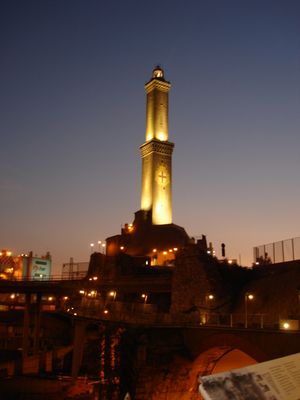
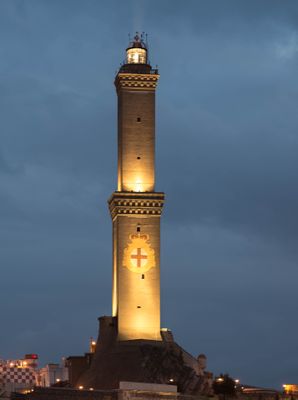
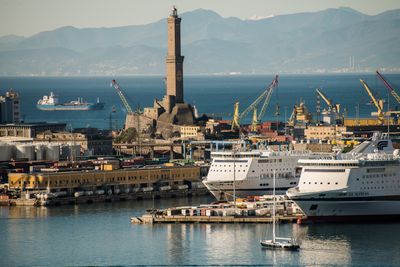
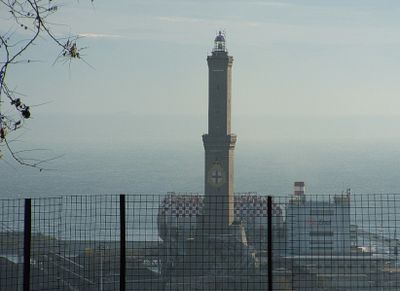
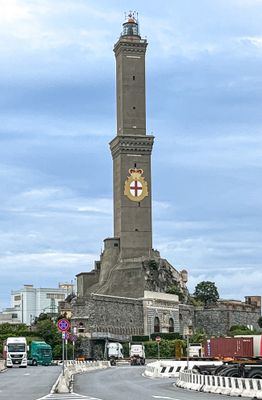
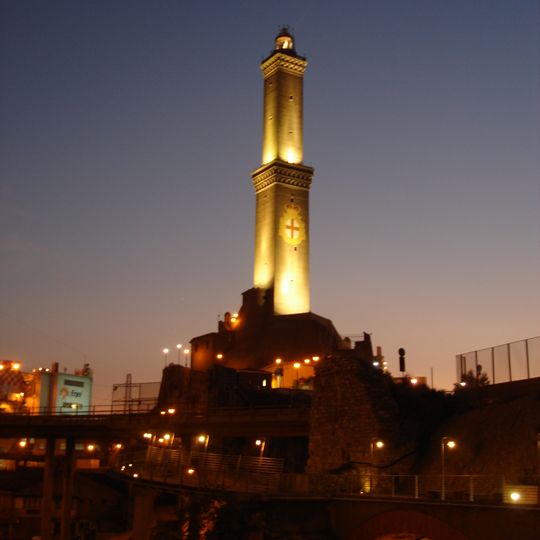
The Lighthouse of Genoa is a stone tower in the port of Genoa, Italy, built in two square sections with terraces. The structure rises 76 meters above sea level and guides vessels along the Ligurian coast.
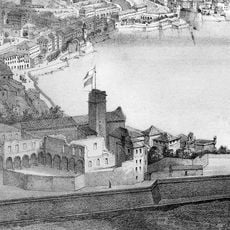
A first signal tower, described as three crenellated sections, stood here from around 1128, burning dried erica and juniper; in 1326 an olive-oil lantern was added and in 1340 the tower was painted with the city's coat of arms. Badly damaged in 1528 during Andrea Doria's recapture of Genoa, it was rebuilt in its present form in 1543 under Doge Andrea Centurione Pietrasanta with funds from the Bank of Saint George. French bombardment damaged it in 1684 and the windows were replaced on Louis XIV's orders in 1692.
The tower gives its name to the Derby della Lanterna, the football match between Genoa C.F.C. and U.C. Sampdoria. In 1405 a fish and a golden cross were placed on its cupola as Christian symbols, and in 1340 the tower was painted with the city's coat of arms to serve as a daymark.
A steep climb of more than 170 steps leads to the viewing terraces and requires moderate fitness. From the upper level you can see the city, the harbor, and the Apennine mountains on clear days.
The tower was used as a prison around 1400; among those held there were James II, king of Cyprus, and his wife. In 1405 a golden cross and a fish were placed on its cupola as Christian symbols. The Museo della Lanterna next to the tower opened to the public in 2006.
The community of curious travelers
AroundUs brings together thousands of curated places, local tips, and hidden gems, enriched daily by 94,630 contributors worldwide.