Bedolina Map, Prehistoric petroglyph site in Valcamonica Valley, Italy
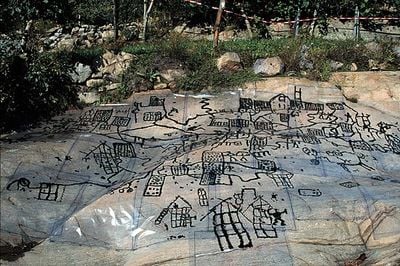
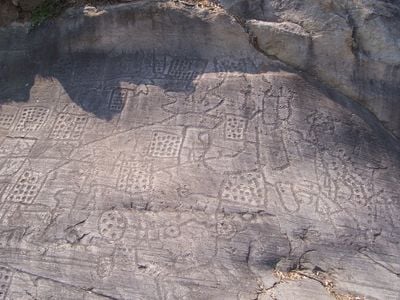
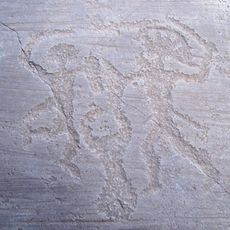
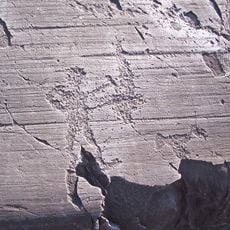
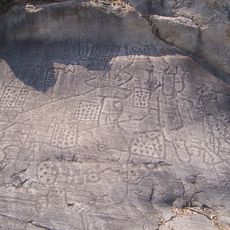
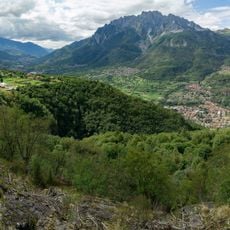
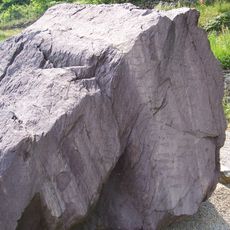
The Bedolina Map is a flat slab of Permian sandstone, 9 m long and 4 m wide, on a terrace at 530 m above sea level in the Camonica Valley. Its surface, polished by a Pleistocene glacier, carries 109 engraved figures: dotted squares and rectangles joined by zigzagging lines, warriors, animals, wooden huts, cup-marks and a Camunnian Rose.
Miguel Beltrán Llorís, the first scholar to study the rock, distinguished four phases in 1972: phases A and B around 1400 BC, and phases C and D between 1000 and 500 BC. In 1997 Cristina Turconi of the University of Milan dated most of the topographic patterns to the Iron Age, between the 6th and 4th centuries BC.
The name "Bedolina Map" comes from the rock's resemblance to a plan of fields, paths and villages. Christian Jacob read the dotted squares and connecting lines as a possible record of land division, crop planning, irrigation and property boundaries held by families or groups of families. The Camunnian Rose and armed warriors were added in later phases.
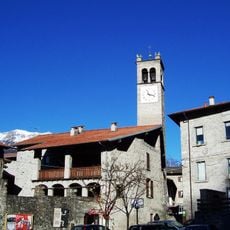
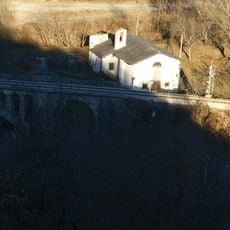
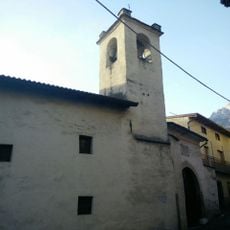
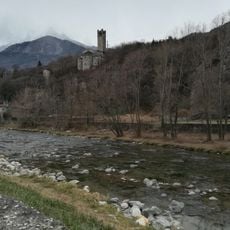
The rock art site sits at a moderate elevation near a small hamlet and can be reached by a walking path through the valley. Informational panels are set up at the location, and guided tours are available to help visitors interpret the carvings.
The engravings contain detailed patterns of dotted squares and zigzag lines that are difficult to make out at first glance. Only when viewing all the markings together do the regular patterns and their purpose as an ancient map become apparent.
The community of curious travelers
AroundUs brings together thousands of curated places, local tips, and hidden gems, enriched daily by 94,202 contributors worldwide.