Museo del Sale, Ethnographic museum in Paceco, Italy
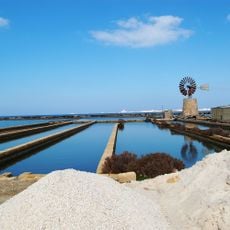
The Museo del Sale is a private ethnographic museum in Nubia, a hamlet of Paceco, inside the Saline di Trapani e Paceco Nature Reserve. It occupies the "casa salaria", a rectangular 17th-century baglio with a gabled roof used for grinding sea-salt crystals, with a large windmill attached and surrounded by the Chiusa salt pan owned by the Culcasi family.
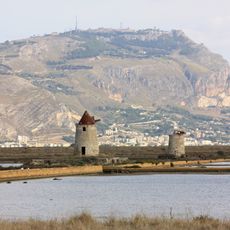
The building is a 17th-century baglio known as "casa salaria", a rectangular structure with a gabled roof used to mill sea-salt crystals, with a large windmill attached. It stands beside the "Chiusa" salt pan owned by the Culcasi family, which is listed in Sicily's Register of Intangible Heritage. The adjacent Salina Culcasi includes the Torre di Nubia, part of Sicily's coastal watchtower system against salt theft by Barbary corsairs from the Maghreb.
The museum is part of the regional Via del Sale itinerary, and the surrounding "Chiusa" salt pan owned by the Culcasi family is listed in Sicily's Register of Intangible Heritage. The exhibits include black-and-white photographs and the salt workers' own tools, among them ruzzoli, cattedri, wooden mill blades (ntinni), the spira and wooden measuring strips (tagghia).
The museum sits along Via Chiusa at the edge of the nature reserve and is straightforward to reach by car. Allow enough time to also walk along the salt ponds nearby, which are accessible on foot from the entrance.
Inside the museum, there is an original Archimedes screw that was actually used to move water between the salt pans. This simple mechanical device was key to the whole production process and still shows how water management made the difference between a good and a poor harvest.
The community of curious travelers
AroundUs brings together thousands of curated places, local tips, and hidden gems, enriched daily by 93,470 contributors worldwide.