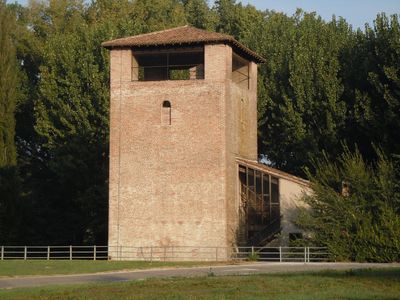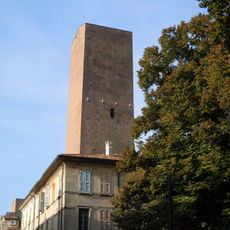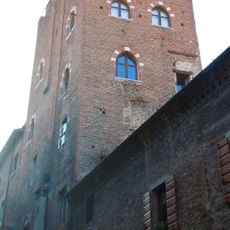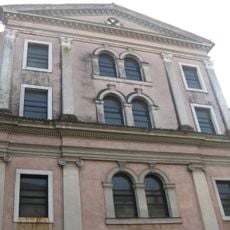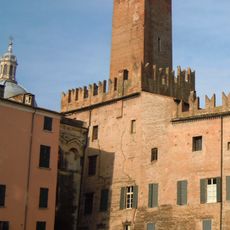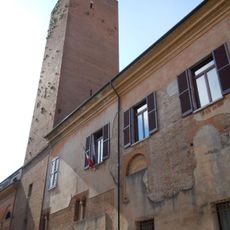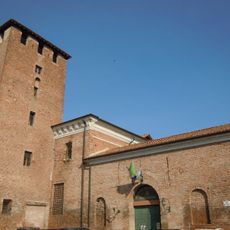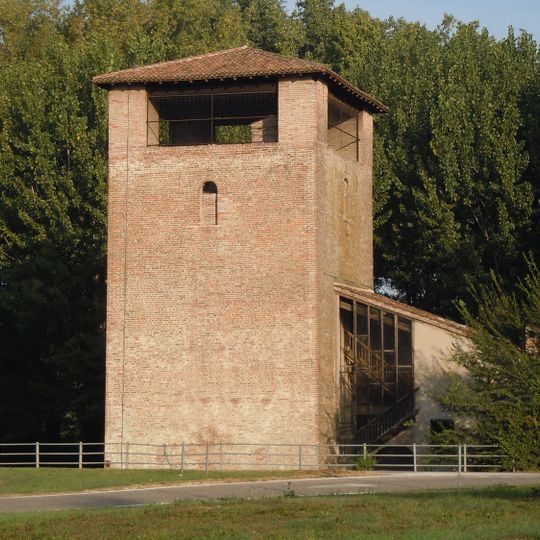
Rocca di Sparafucile, Medieval defensive tower in Mantua, Italy.
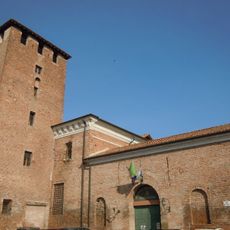
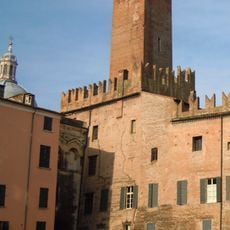
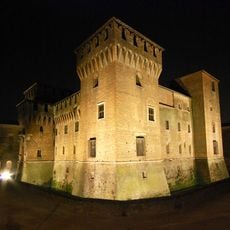
The Rocca di Sparafucile stands as a robust medieval tower constructed with brick and stone materials, featuring compact geometric forms designed to withstand time and weather conditions while controlling access through the San Giorgio Bridge.
Erected probably at the end of the 14th century to defend the San Giorgio bridge, the eastern access to Mantua, the fortress was built while Ludovico I Gonzaga was lord of the city. It was renovated in the mid-15th century, restored in 1863, and lost its defensive role in 1866. It is the only surviving trace of the old borgo di San Giorgio, demolished after Mantua joined the Kingdom of Italy.
The name Sparafucile comes from the assassin in Verdi's Rigoletto, though the opera is not otherwise linked to the tower. The nickname recalls the building's military past. The tower appears in Andrea Mantegna's painting 'Death of the Virgin' (c. 1462), part of the Gonzaga Collections and now in the Prado, Madrid.
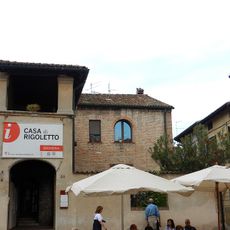
The tower stands at the end of the San Giorgio bridge, the historic eastern entrance to Mantua. It was listed among the FAI Luoghi del Cuore in 2016, and in autumn 2017 the surrounding area was due for redevelopment, with the building intended to house a tourist information office.
The tower appears in Andrea Mantegna's painting Death of the Virgin, made around 1462 and now in the Prado in Madrid as part of the Gonzaga collections. The building was also used in 2010 for the television film Rigoletto a Mantova.
The community of curious travelers
AroundUs brings together thousands of curated places, local tips, and hidden gems, enriched daily by 95,484 contributors worldwide.