Palazzo Cimarra, Palace and Italian national heritage site on Via Panisperna, Monti district, Rome, Italy
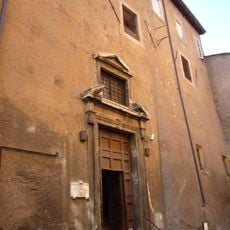
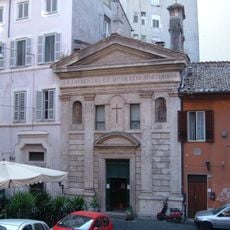
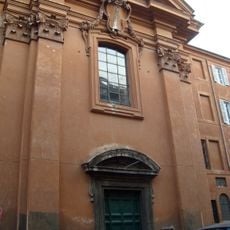
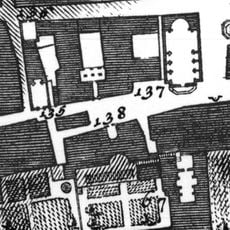
Palazzo Cimarra is a palace featuring Baroque design with an irregular floor plan, ornate windows, and a prominent rustic portal entry along Via Panisperna in the Monti district. The building sits directly across from the church of San Lorenzo in Panisperna and displays architectural elements typical of its period.
Built in 1736, possibly by Ferdinando Fuga, who was then working at the nearby church of Gesù Bambino all'Esquilino. At the end of the 18th century it passed to Count de Souza Holstein, Portuguese ambassador to Rome, and became known for his sumptuous parties and banquets. In the 19th century it was bought by the Cimarra family; between 1860 and 1870 the Papal Zouaves, recruited mainly in France, Belgium and the Netherlands, were quartered there. After 20 September 1870 the Italian state used it as military housing, and it was restored in 1958.
The name comes from the Cimarra family, who bought the building in the 19th century. Before them, the palace was known for the sumptuous parties and banquets held by Count de Souza Holstein, Portuguese ambassador to Rome, at the end of the 18th century. Today it houses the Ministry of the Interior.
The palace is located at Via Panisperna 197 in the Monti district and can be viewed from the street to appreciate its Baroque architecture. Currently serving as a police command headquarters, it is not open to the public but remains visible from the outside.
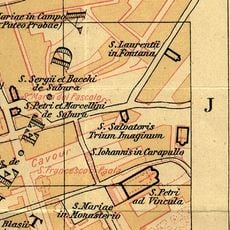
The palace sits directly opposite the church of San Lorenzo in Panisperna, creating a distinctive architectural pairing along the street. This positioning between a secular residence and a place of worship reflects the urban layout decisions of the neighborhood during that era.
The community of curious travelers
AroundUs brings together thousands of curated places, local tips, and hidden gems, enriched daily by 93,606 contributors worldwide.