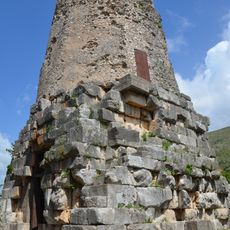
Cisternone Romano, Ancient Roman cistern in Formia, Italy.
The Cisternone Romano is an underground Roman water storage structure in Formia covering approximately 1,200 square meters in area. Inside, 53 central pillars support the roof, while additional columns along the side walls stabilize the structure and divide the water sections.
Built in the 1st century BC, the Cisternone collected water carried by Formia's aqueducts and redistributed it across the city. It predates Istanbul's Basilica Cistern. The sources record no later abandonment date.
The name Cisternone is an augmentative of the Italian cisterna, meaning a reservoir larger than usual. The structure predates Istanbul's Basilica Cistern, also built in the 1st century BC. Visitors can see the irregular perimeter and four aisles formed by rows of columns.
The cistern lies underground and is reached by descending from street level; the space is unlit and humid, so bring a torch and wear shoes with grip on the uneven floor. The irregular perimeter and the rows of columns make the four aisles easy to lose track of, so keep to the central pillars as a reference. Allow about half an hour for the visit.
The basin could hold about 7,000 cubic meters of water and reached a height of about 7.5 meters, making it the largest structure of its kind for a long time. This capacity allowed the city to survive longer dry periods.
The community of curious travelers
AroundUs brings together thousands of curated places, local tips, and hidden gems, enriched daily by 93,433 contributors worldwide.