Astronomical observatory of Siena observatory, University astronomical observatory in Siena, Italy
The Astronomical Observatory of Siena is a university research facility featuring a distinctive dome structure and professional telescopic equipment. The instruments are designed for both scientific research and educational purposes, allowing observers to study the night sky systematically.
Siena's astronomical attention is documented by two meridian lines: one traced in 1703 at the Accademia delle scienze for the physician Pirro Maria Gabrielli, destroyed by the 1798 earthquake, and a second placed in 1850 by Giuseppe Pianigiani. The physics institute moved to the San Niccolò complex in 2003, and the observatory was constituted there in 2014, gathering instruments used in the Chianti in the 1990s and renewed between 2010 and 2012.
The observatory is part of Siena's university museum system, SIMUS, and hosts students from the universities of Siena, Arezzo and Grosseto for astronomy training. Through the ESCAC project it runs workshops for schools of every level, and its instruments trace back to the 1990s Chianti observatory.
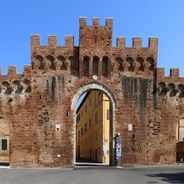
The dome sits on the roof of the Physics section building in the San Niccolò university complex, near Porta Romana. The dome and all instruments are fully operable remotely, so access is tied to university laboratory and internship use. The observatory belongs to the SIMUS university museum system, which is the reference for organised visits.
The dome is a 3-metre sphere on the roof of the Physics section at the San Niccolò complex, near Porta Romana, not on a hillside. Its 32 cm Maksutov-Cassegrain telescope, with a 1650 mm focal length and computer-controlled equatorial mount, is fully operable remotely.
The community of curious travelers
AroundUs brings together thousands of curated places, local tips, and hidden gems, enriched daily by 93,783 contributors worldwide.