Castello Normanno-Svevo, Medieval castle in Vibo Valentia, Italy
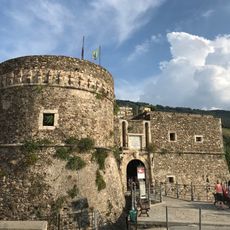
Castello Normanno-Svevo is a fortress perched on a hilltop with thick stone walls, rounded towers, and an inner courtyard that define its military design. The structure was built in stages using construction methods from different periods, creating distinct layers visible throughout the complex.
The castle dates from the first half of the 13th century, built in the era of Emperor Frederick II rather than under Roger the Norman, as local tradition claims. It was enlarged in the 13th century on behalf of the House of Anjou. Minor alterations in the 16th century turned it into a noble residence, and after earthquake damage in the late 18th century it served as a prison. Since 1969 it has housed the archaeological museum named after Count Vito Capialbi.
The castle displays a blend of Norman defensive methods with Swabian building techniques that remain visible in its walls and towers. These layers show how different rulers left their mark on the fortress.
The castle stands in the historic centre of Vibo Valentia, and the museum inside is reached through the castle courtyard. The archaeological collection occupies several floors, with the necropolis finds in the lower level and the Magna Graecia material on the first floor. The courtyard displays a 3rd-century mosaic found at the old harbour of the city.
The museum's collection includes a 13th-century BCE sword found by chance in a 6th-century BCE grave, and a gold leaf inscribed in Doric-Ionic dialect with advice for the dead in the underworld, from a woman's tomb. In the courtyard stands a 3rd-century mosaic recovered from the city's old harbour.
The community of curious travelers
AroundUs brings together thousands of curated places, local tips, and hidden gems, enriched daily by 94,675 contributors worldwide.