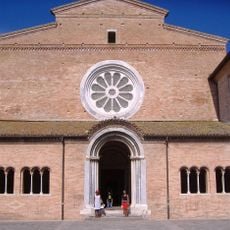
Abbazia di Rambona, Abbey in Pollenza, Italy
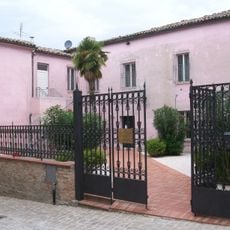
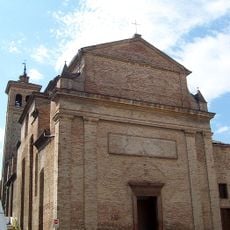
Abbazia di Rambona stands in the Potenza valley at Rambona, in the municipality of Pollenza. Its 9th-century Carolingian building, recently identified, is among the few surviving examples of Carolingian architecture in Europe. The crypt, three apses and presbytery belong to an 11th–12th-century Romanesque enlargement. A 19th-century villa built for Count Antonelli-Incalzi incorporates the central nave, the hypogeum and the north chapel.
Empress Ageltrude of the Lombards had the abbey built between 891 and 898, entrusting Abbot Olderico with the work; it may have replaced a destroyed 7th–8th-century Benedictine monastery. A pagan sanctuary of Bona Dea, linked to the Rio Acqua Salata spring, had stood on the site. In 1443 troops of Francesco Sforza sacked and burned it, starting a long decline; in 1819 it became a parish.
The name Rambona comes from Ara Bonae Deae, the altar of the goddess Bona, whose water cult preceded the abbey at the confluence of the Rio Acqua Salata and the Potenza. In the crypt, a central fresco shows Sant'Amico, the monastery's second abbot, taming a wolf; pilgrims on the Via Lauretana stopped here to pray to him for cure from hernia.
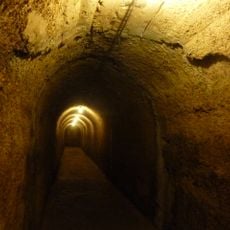
The Romanesque crypt and the reworked presbytery remain in liturgical use, while the 19th-century villa of the Antonelli-Incalzi counts absorbed the central nave, the hypogeum and the north chapel; the south chapel became the canonica. Expect a working parish church rather than a museum, with the crypt and presbytery as the parts to seek out.
The ivory diptych commissioned by Abbot Olderico in the 9th century, now in the Vatican Museums, shows the Roman she-wolf with the twins beneath the Crucifix; this motif appears on only one other object, a bone casket in the British Museum. A plaster copy stands in the presbytery.
The community of curious travelers
AroundUs brings together thousands of curated places, local tips, and hidden gems, enriched daily by 93,810 contributors worldwide.