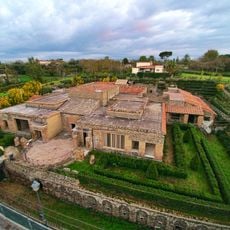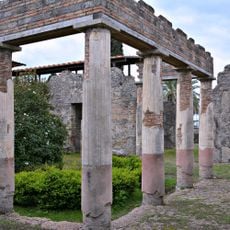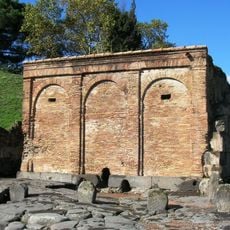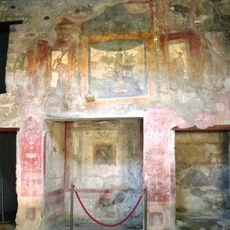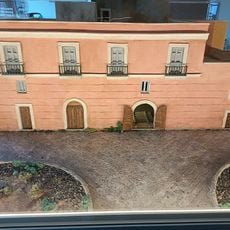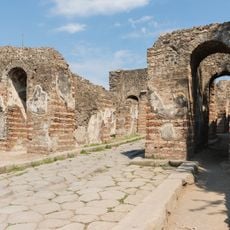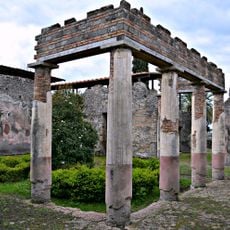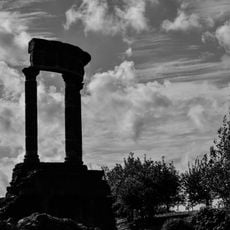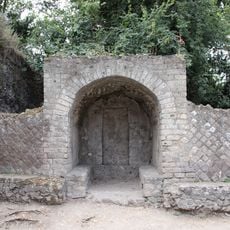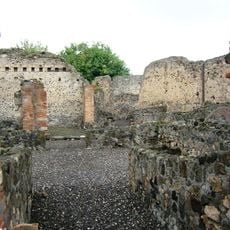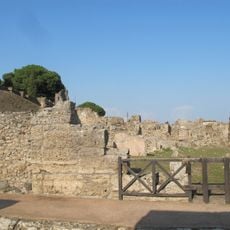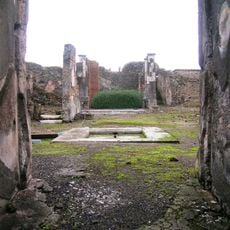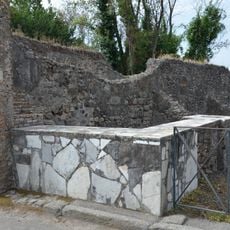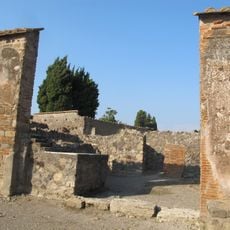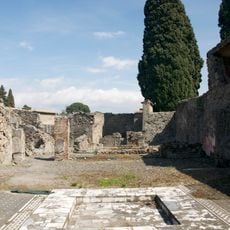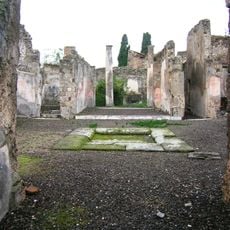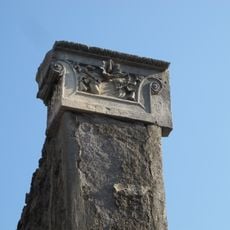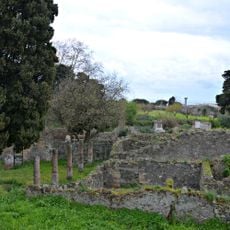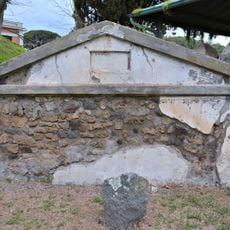
Villa of Publius Fannius Synistor, Roman villa in Boscoreale, Italy.
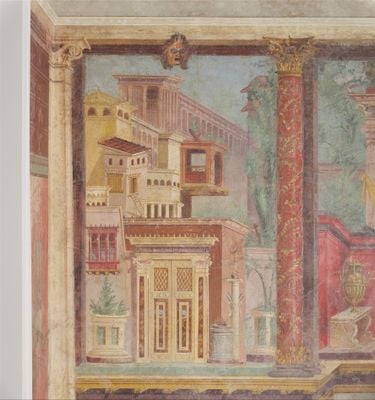
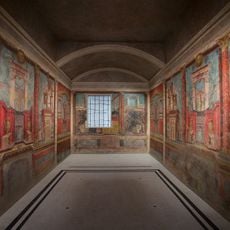
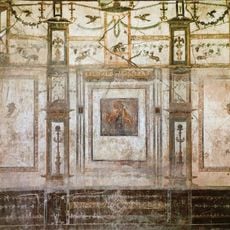
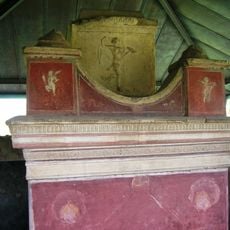
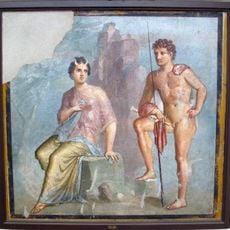
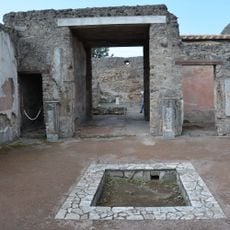
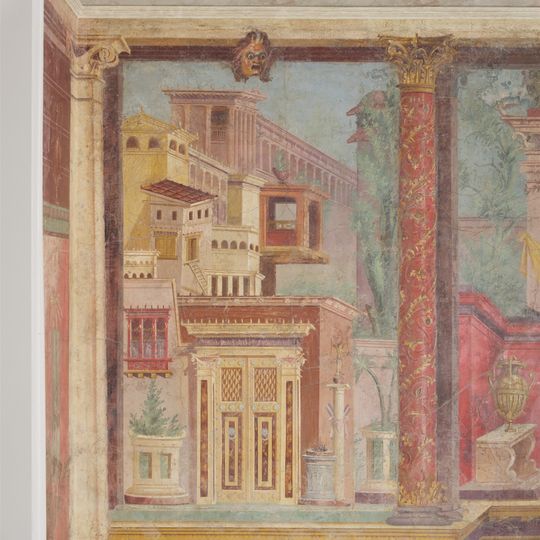
The Villa of Publius Fannius Synistor is a three-story Roman residence with elaborately decorated rooms full of wall paintings. These frescoes feature detailed architectural elements such as columns, balustrades, and courtyards adorning the walls of various chambers.
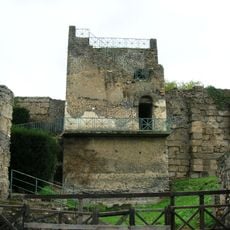
The residence was built around 40-30 BCE during the Late Republic for a wealthy family. Mount Vesuvius's eruption in 79 CE buried it under volcanic ash, preserving the structure and its decorations for nearly 2000 years.
The walls display portraits of Greek philosophers and artists alongside decorative statues of satyrs and nymphs, showing how educated Romans expressed their admiration for Greek culture through their homes. These choices reveal what mattered to the villa's owner and his circle.
Most of the preserved frescoes are now displayed at the Metropolitan Museum of Art, where visitors can study Roman painting techniques in detail. Visiting both locations provides a complete picture of the craftsmanship of that era.
The walls employ trompe-l'oeil techniques that create optical illusions, making painted vases and architectural features appear to project from flat surfaces. These sophisticated painting methods reveal how Roman artists played with space and depth perception.
The community of curious travelers
AroundUs brings together thousands of curated places, local tips, and hidden gems, enriched daily by 92,373 contributors worldwide.