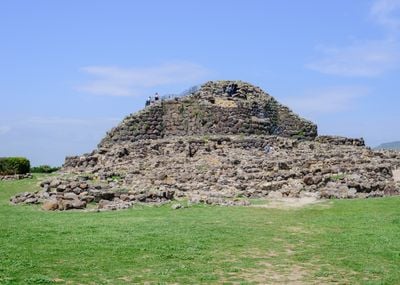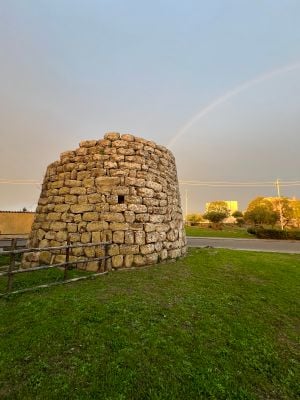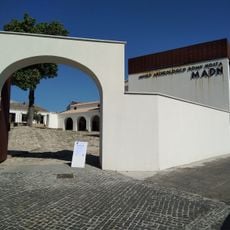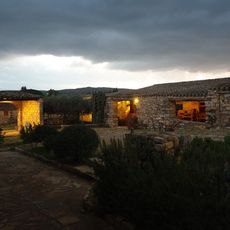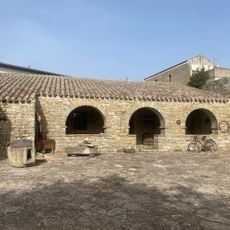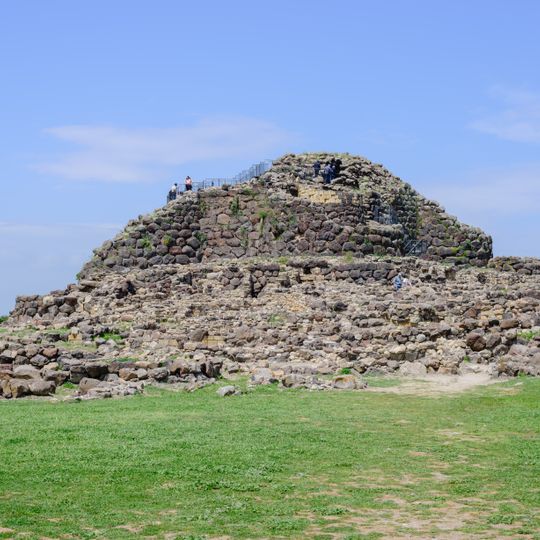
Nuraghe Su Nuraxi, Bronze Age stone fortress in Barumini, Sardinia, Italy.
This archaeological complex features a central tower surrounded by defensive walls and smaller structures, all built from large basalt blocks using dry stone techniques without mortar.
Constructed around 1500 to 1300 BC during the Nuragic civilization, the fortress was inhabited for centuries and underwent multiple phases of expansion and restoration over time.
The site represents the advanced engineering skills of Nuragic people, who quarried, transported, and assembled massive stones to create megalithic structures that served as symbols of political power.
Guided tours are available year-round through the on-site museum, with spring and early fall offering the most comfortable visiting conditions for exploring the stone ruins and learning about construction techniques.
As a UNESCO World Heritage site since 1997, Su Nuraxi is among the best-preserved examples of nuraghe architecture, demonstrating how ancient Sardinians organized defensive and communal spaces.
Location: Siurgus Donigala
Address: Via Nuraghe, 3, 09040 Siurgus Donigala Città Metropolitana di Cagliari 09040 Siurgus Donigala 09040 Siurgus Donigala
GPS coordinates: 39.59637,9.18193
Latest update: December 2, 2025 14:14
Italy holds archaeological sites spanning several millennia, offering insights into Etruscan, Greek and Roman civilizations. These locations include necropolises with thousands of tombs, well-preserved Roman villas and ancient settlements along the Mediterranean coast. Many of these sites lie beyond the more familiar destinations and document different aspects of Italian history. The Necropolis of Pantalica near Sortino contains approximately 5,000 rock-cut tombs from the Sicilian Bronze Age, while the Villa of the Mysteries in Pompeii is known for its wall paintings from the first century BCE. Villa del Casale near Piazza Armerina displays Roman floor mosaics covering more than 37,500 square feet (3,500 square meters). Etruscan burial sites like the Tomb of the Orcus in Tarquinia preserve frescoes from the fourth century BCE. The Archaeological Park of Elea-Velia near Ascea includes remains of a Greek colony founded in the sixth century BCE.
Necropolis of Pranu Muttedu
8 km
Beata Vergine Assunta
12.3 km
St. Peter church, Suelli
5.8 km
Necropolis of Monte Luna
10.1 km
Chiesa di Santa Giusta
6.7 km
San Sebastiano
9.8 km
Chiesa di San Pietro
10.6 km
Villa Aresu
3.6 km
Museo del Grano
10.6 km
Museo archeologico Sa Domu Nosta
8.2 km
Museo parrocchiale di Selegas
5.5 km
Monte San Mauro
11.2 km
Nuraghe Goni
8.1 km
Pino d'Aleppo
8.4 km
Nuraghe di Sisini
3.9 km
Museo del grano di Ortacesus
10.5 km
Chiesa di San Giacomo
7.8 km
Chiesa parrocchiale di San Pietro
6.6 km
Chiesa di Sant'Anna
7.4 km
Casa-museo Is Lollas de is Aiaiusu
7.9 km
Parco Santa Mariedda
7.7 km
Parco Santa Lucia
7.5 km
Ex Monte Granatico
8 km
Piazza IV Novembre
7.9 km
Pranu Muttedu Archaeological Park
8 km
Piazza dei 150 anni
7.7 km
Scenic viewpoint
11.2 km
№ 3
8.4 kmReviews
Visited this place? Tap the stars to rate it and share your experience / photos with the community! Try now! You can cancel it anytime.
Discover hidden gems everywhere you go!
From secret cafés to breathtaking viewpoints, skip the crowded tourist spots and find places that match your style. Our app makes it easy with voice search, smart filtering, route optimization, and insider tips from travelers worldwide. Download now for the complete mobile experience.
A unique approach to discovering new places❞
— Le Figaro
All the places worth exploring❞
— France Info
A tailor-made excursion in just a few clicks❞
— 20 Minutes