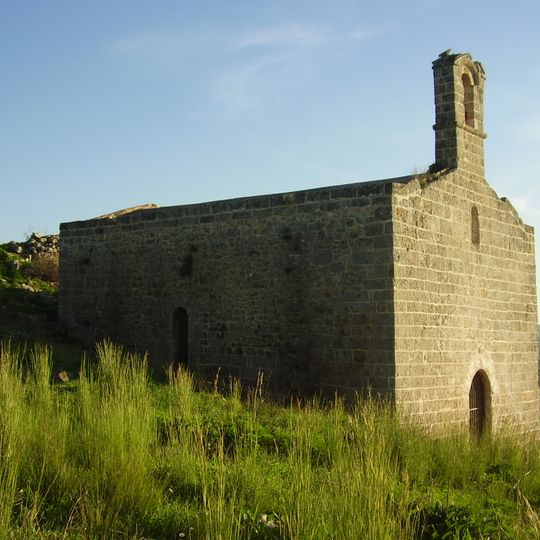
Category:Abbazia di San Mauro, Medieval abbey in Sannicola, Italy.
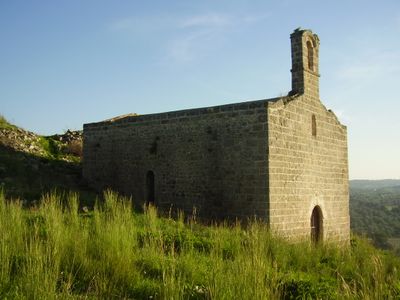
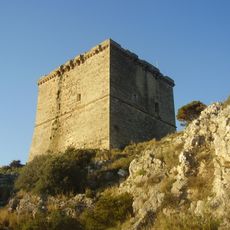
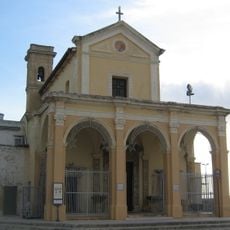
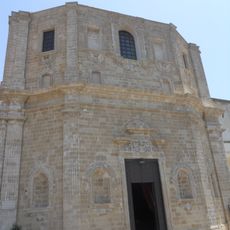
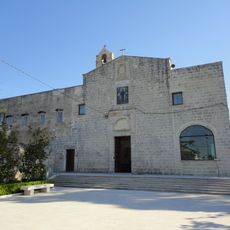
Abbazia di San Mauro stands on a rocky spur about 70 metres above the sea at Lido Conchiglie, in Sannicola. The church is built of squared tufa blocks on a rectangular plan of 10.60 by 6.30 metres, with a lunate-arched portal, a splayed window above it and a bell gable on top. Inside, six square pillars without capitals divide three naves with pointed arches, a barrel-vaulted central nave and three eastern apses.
Built between the 10th and 12th centuries by Italo-Greek Basilian monks, the abbey is first documented in 1149 in a Greek-language parchment. A laura, or monastic complex, stood beside it, dependent on either Santa Maria delle Servine in Gallipoli or Santa Maria di Nardò. After prospering through land holdings, it fell into ruin: Bishop Pelegro Cibo described abandoned structures during a 1547 visit. It was declared a national monument in 1968.
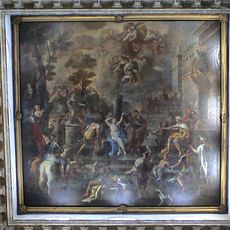
The abbey's name comes from Saint Mauro, martyred in 284 with Claudius, Hilaria and Jason; legend says the church was built near the cave of their martyrdom. The 13th-century frescoes were painted by several workshops from Greece, and the abbey was declared a national monument in 1968.
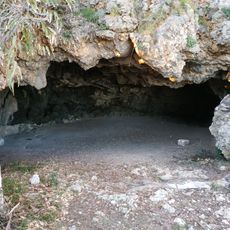
The abbey stands on a rocky spur about 70 metres above the sea at Lido Conchiglie, in the Sannicola area, and is reached on foot along paths on the height. The church measures 10.60 by 6.30 metres, so a visit is short; the three cave entrances of the former laura nearby are only partly accessible, and one still holds unidentifiable fresco remains.
The abbey stands on a rocky spur about 70 metres above the sea at Lido Conchiglie, not in open countryside. Beside the church, three entrances lead into caves of the former laura; only one is partly accessible and keeps unidentifiable traces of frescoes.
The community of curious travelers
AroundUs brings together thousands of curated places, local tips, and hidden gems, enriched daily by 94,580 contributors worldwide.