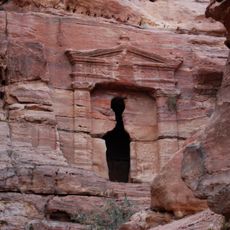
Tomb of Aaron, Religious mausoleum in Petra, Jordan.
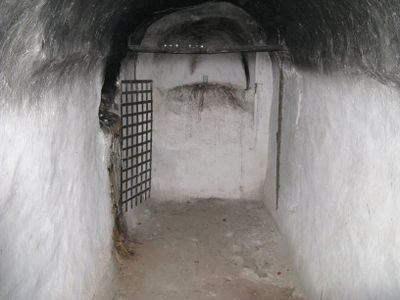
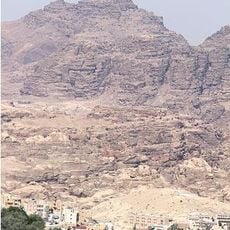
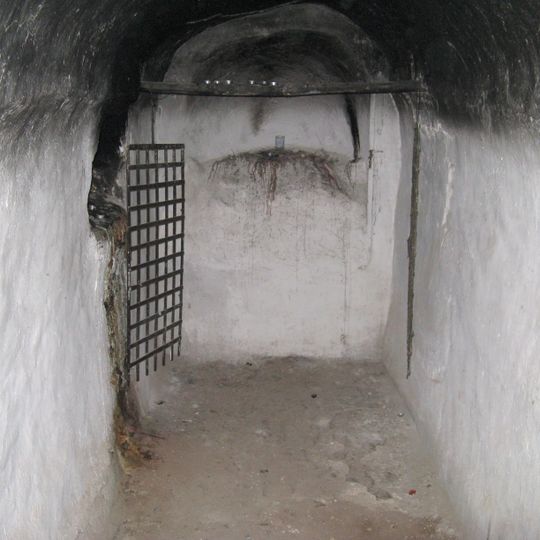
The Tomb of Aaron is a shrine on Jabal Harun, the highest point near Petra at 1,350 metres. It consists of a 10 by 8 metre sandstone room covered by a white dome, with a small courtyard. Above the door, an inscription records its renewal in 719 AH (1319/1320 CE) by Sultan al-Nasir Muhammad. Inside, a black metal grille stands at the entrance, and reddish-brown streaks run down the plaster beneath a ledge on the far wall.
The current building dates to the 14th-century Mamluk period, with inscriptions above the entrance recording renovations from 1320. Excavations beneath the summit revealed remains of a Byzantine monastery complex, including a church dedicated to Aaron.
The site holds religious meaning for Jewish, Christian, and Muslim communities, who all venerate this as the burial place of Aaron, Moses's brother. Pilgrims of different faiths still visit to honor this shared sacred location.
The hike to the mausoleum is physically demanding with steep, rocky terrain that requires good fitness and preparation. Start early in the day, bring plenty of water, and wear sturdy footwear to safely navigate the climb.
The Arabic name Jabal Harun means "Aaron's Mountain". The shrine's door carries the renewal date 719 AH (1319/1320 CE), attributed to Sultan al-Nasir Muhammad, son of Qalawun. In 2019 Jordanian authorities closed the summit to foreign tour groups without Awqaf Ministry permission after Israeli visitors danced with a Torah scroll there; unrestricted access returned that December.
The community of curious travelers
AroundUs brings together thousands of curated places, local tips, and hidden gems, enriched daily by 93,111 contributors worldwide.