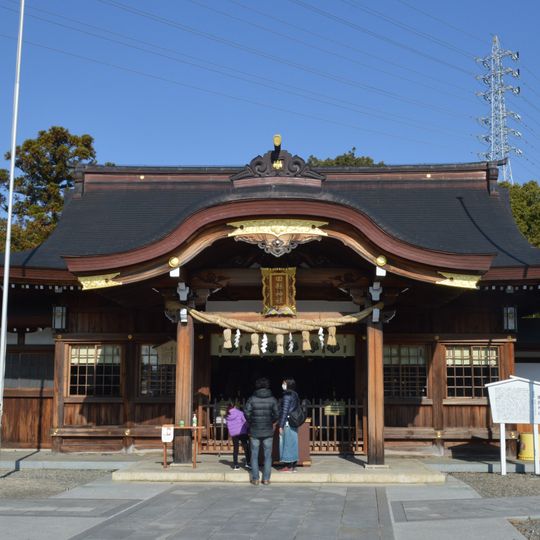
Tagata Shrine, Shinto shrine in Komaki, Japan.
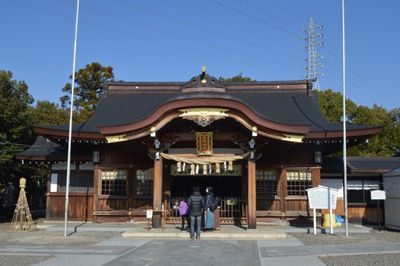
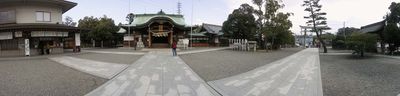
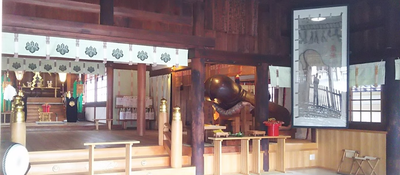
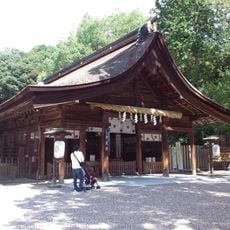
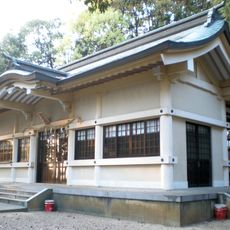
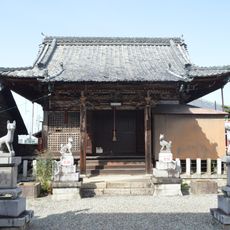
Tagata Shrine in Komaki, Aichi Prefecture, has a main hall with a curved gabled roof of weathered green copper, its open front hung with a plaited straw rope and white zigzag paper streamers. To the right, lower buildings with dark tiled roofs and white sliding panels extend sideways. A gravel forecourt and paved walkway lie in front, and many phallic stones are enshrined in the grounds.
The founding date is unknown. Until the Edo period the shrine was called Agata-no-mori and belonged to Kubo-Isshiki village in Kasugai district. In the mid-Edo period, Amano Nobukage identified it with the Niwa district shrine "Tagata Jinja" listed in the Engishiki Jinmyocho, and this became the accepted view. Until the separation of Shinto and Buddhism, Kubo-ji served as its jinguji.
The shrine's name appears in the Engishiki shrine register as Tagata Shrine of Niwa District, Owari Province. Its March 15 Toyonosai, a Komaki City intangible folk cultural property also called Henoko Festival, features men carrying the Ono Wasegata, a newly made cypress phallus about 2 meters long and 60 cm in diameter, while shrine maidens carry smaller phallus shapes; touching them is said to grant children.
The shrine sits around 50 minutes by train from Nagoya, followed by a brief walk. The grounds are open during the day, though the March event draws especially large crowds.
Visitors can buy amulets and small objects related to the traditional theme of the site. These souvenirs recall the agricultural and family wishes that have been part of prayers here for centuries.
The community of curious travelers
AroundUs brings together thousands of curated places, local tips, and hidden gems, enriched daily by 93,231 contributors worldwide.