Ōagata Shrine, Shinto shrine in Inuyama, Japan
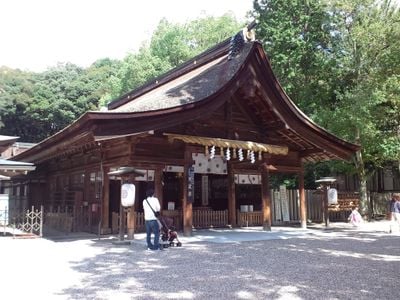
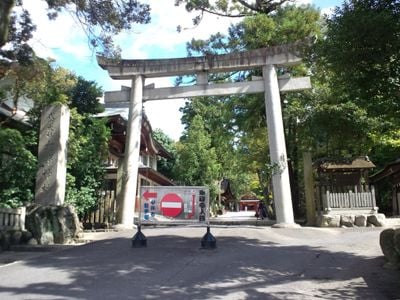
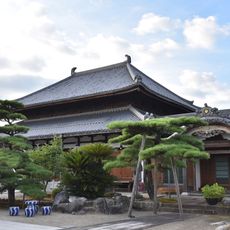
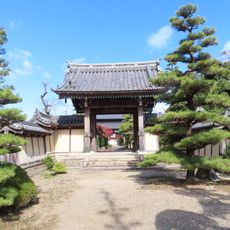
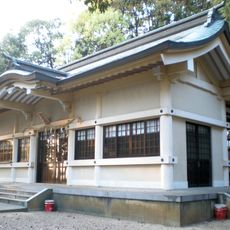
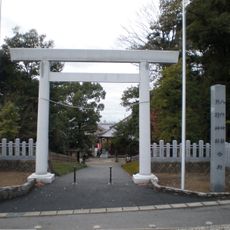
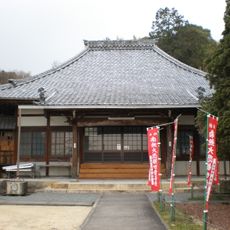
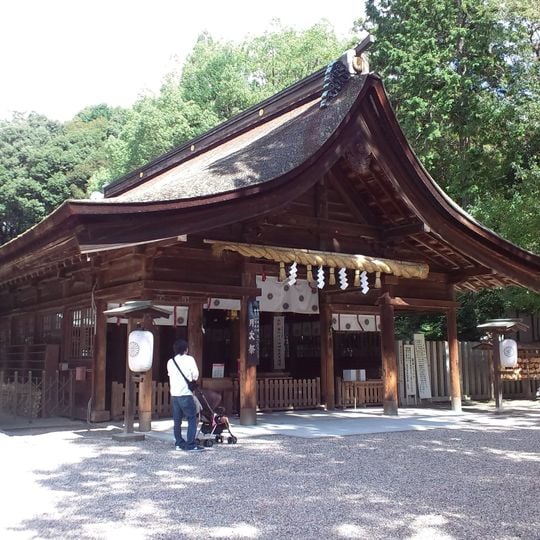
Ōagata Shrine in Inuyama is a Shintō sanctuary whose main hall, built in 1661 by Tokugawa Mitsutomo, is designated an Important Cultural Property. The dark timber building has a steeply pitched roof with upward-curving eaves, a deep gable over the entrance, and a twisted straw rope with five white zigzag paper streamers across the front. A pale gray torii gate with weathered streaks and stone bases stands at the approach.
According to the shrine's tradition, it was moved from the summit of Mount Honomiya to its present site in the 27th year of Emperor Suinin's reign. In 847 it was raised from no rank to Junior Fifth Rank, Lower Grade, and by 873 it had reached Senior Fourth Rank, Lower Grade. The main hall was built in 1661 by Tokugawa Mitsutomo, second lord of Owari Domain, in a style called Ōagata-zukuri.
The shrine's name comes from Ōagata-no-Ōkami, honoured as the founding deity who opened up Owari Province. Its Hime-no-Miya auxiliary shrine honours Tamahime-no-Mikoto and has long drawn women praying for safe childbirth and conception, who donate stones carved in the shape of female genitalia. Each year around 15 March the Hōnen Festival, also called the Ososo Festival, parades floats of the same form, paired with the phallic procession at Tagata Shrine in Komaki.
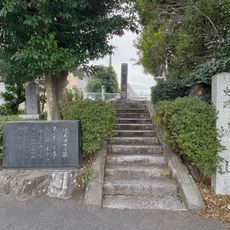
Buses from Inuyama Station stop nearby, from where it takes a short walk through a residential area to reach the entrance. The path from the gate to the main building follows a gently rising trail with stone steps.
A smaller secondary shrine stands in the rear area that many visitors overlook, even though it honors a different protective deity. Several old cedar trees grow on the grounds, estimated to be several centuries in age.
The community of curious travelers
AroundUs brings together thousands of curated places, local tips, and hidden gems, enriched daily by 93,254 contributors worldwide.