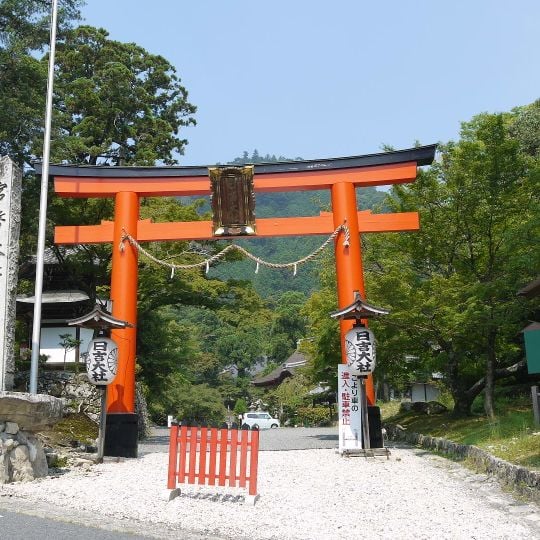
Hiyoshi Taisha, Shinto shrine in Sakamoto, Japan
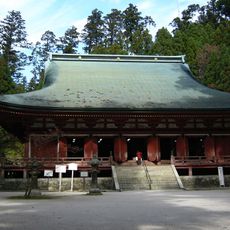
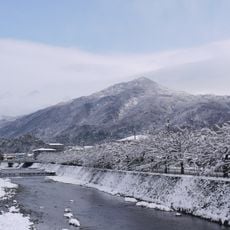
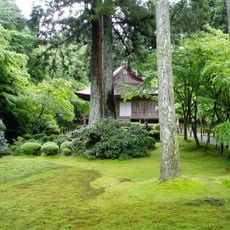
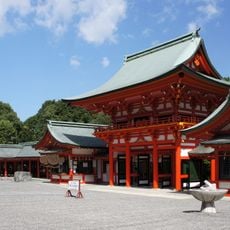
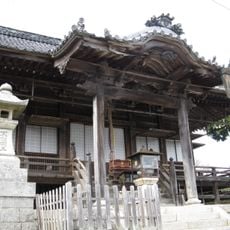
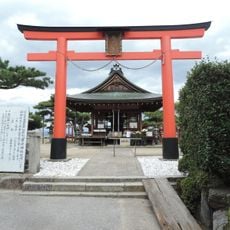
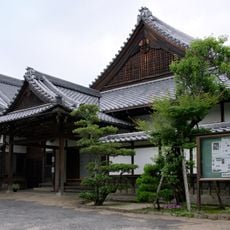
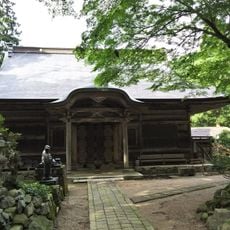
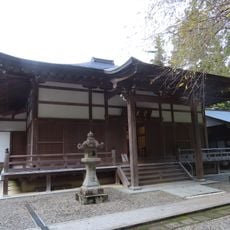
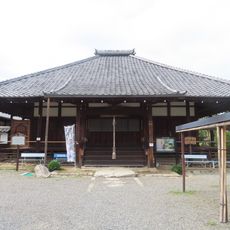
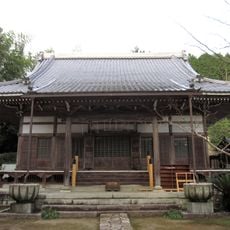
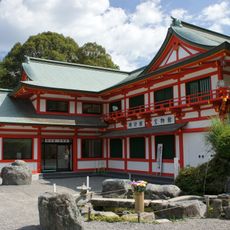
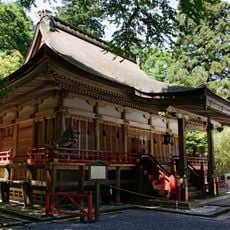
Hiyoshi Taisha is a Shinto shrine in Sakamoto, Ōtsu, at the foot of Mount Hiei. Its two main sanctuaries are the Nishi Hongū (rebuilt 1586) and the Higashi Hongū (rebuilt 1595), both National Treasures. The 400,000-square-metre precincts contain many structures from the 1586–1597 reconstruction, and its torii take the Sannō torii form, with a triangular element above the crossbeam.
The shrine was founded more than 2100 years ago and appears in the ancient Kojiki chronicles as a sacred site in the region. Over time, it became the head shrine for approximately 3800 branch shrines across the country that now carry the names Hiyoshi, Sanno, or Hie.
The shrine's name was read Hie until after World War II, when it was changed to Hiyoshi and the suffix 'jinja' to 'taisha' to distinguish it from branch shrines. Monkeys serve as the shrine's divine messengers, called Masaru, and the Sanno Festival, held over one and a half months, features seven mikoshi carried in a sacred boat across Lake Biwa in April.
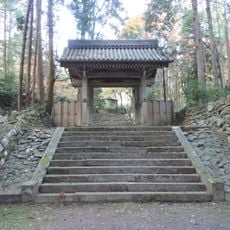
The shrine is located roughly a ten-minute walk from Sakamoto Station on the Keihan Electric Railway and opens daily from 9 in the morning to half past 4 in the afternoon. Stone steps can become slippery during winter, so wearing solid shoes and walking carefully during rain helps avoid any discomfort.
The shrine's messenger animal is the monkey, called Masaru, a word that also means "to win" or "to excel" in Japanese. Toyotomi Hideyoshi, whose childhood name was Hiyoshi Maru and whose nickname was "monkey", was a devout believer in the Sanno Gongen and supported the shrine's reconstruction after 1571.
The community of curious travelers
AroundUs brings together thousands of curated places, local tips, and hidden gems, enriched daily by 94,084 contributors worldwide.