Ana Hachimangū, Hachiman shrine in Nishi-Waseda, Japan
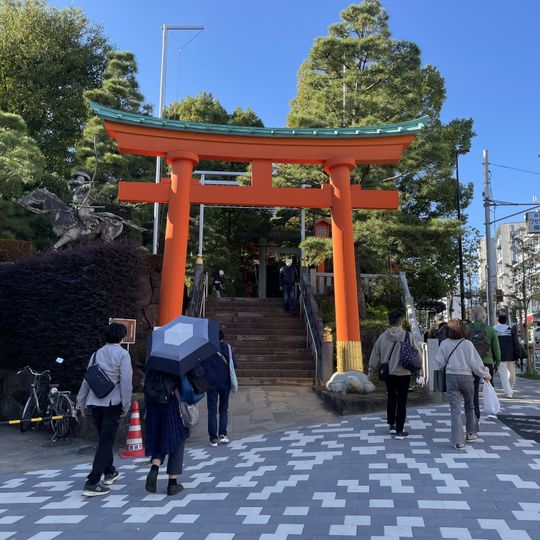
Ana Hachimangū is a Shinto shrine in Nishi-Waseda, Tokyo, reached by stone steps from a plaza on Waseda-dōri. A bright orange-red torii with a green-edged roof and gold-painted pillar bases stands over the stairway. Up the slope, the worship hall has a broad dark tiled roof with curved eaves, a dark timber facade with gold fittings, and a central projecting bay. Stone guardian lions and lanterns flank the approach.
According to shrine tradition, Minamoto no Yoshiie enshrined Hachiman here in 1062 after a campaign in the Tōhoku region. In 1641 a cave was found and a gilt bronze statue emerged, prompting the name Ana Hachimangū. The 1945 air raids burned many buildings; the main hall was rebuilt from 1961 and the worship hall in 1989.
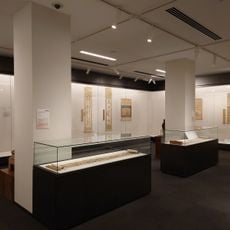
The shrine's yabusame, mounted archery, began when shogun Tokugawa Yoshimune dedicated it in 1728. Revived in 1934 for the birth of Crown Prince Akihito, it has been held yearly since 1979 on Sports Day at Toyama Park, not in October. A scroll kept at the shrine depicts a 1738 yabusame for the birth of Tokugawa Ieharu.
Access is through Waseda Station on the Tozai Line of Tokyo Metro, from where the hilltop is a few minutes on foot. The site is best visited during daylight when natural light illuminates the paths and steps.
Workers digging in 1641 discovered a cave containing a gilt bronze statue of Buddha. This find prompted the renaming of the shrine by adding the word ana, which means hole or cave in Japanese.
The community of curious travelers
AroundUs brings together thousands of curated places, local tips, and hidden gems, enriched daily by 93,146 contributors worldwide.