Amatsu Shrine, Shinto shrine in Ichinomiya, Itoigawa, Japan
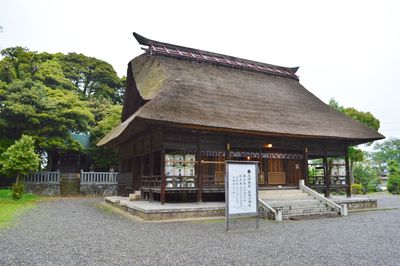
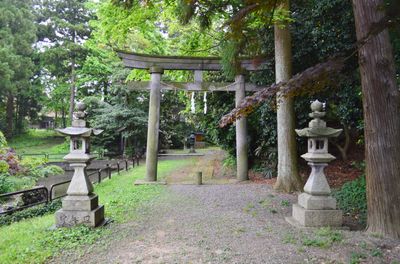
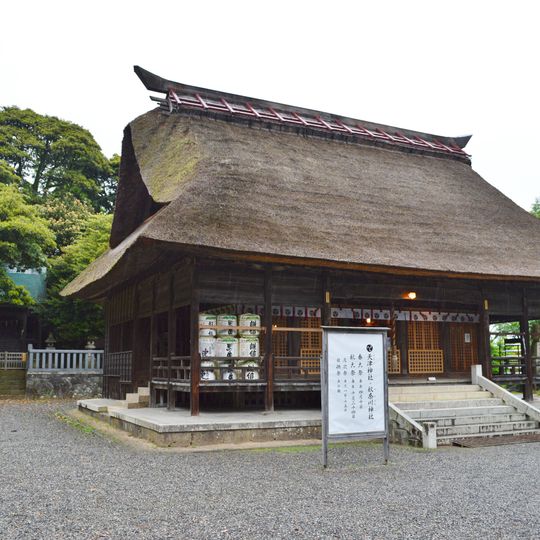
Amatsu Shrine in Itoigawa centres on a thatched irimoya-style heiden built in 1662, a 7 x 5 bay structure whose deep roof shelters a dark wooden facade hung with white paper lanterns and rows of votive plaques. The haiden, a gabled 3 x 2 bay building with a copper roof, dates from 1797. A grey stone torii with a rope of white zigzag streamers and two carved stone lanterns stands at the approach.
Tradition dates the shrine's founding to the reign of Emperor Keikō (71–130), and records state Emperor Kōtoku had prayers said here. It appears in the Engishiki of 927 as a major shrine of Kubiki County, though identification with the present shrine is uncertain. In 1611 the Tokugawa shogunate granted it 100 koku, later converted to a vermilion-seal estate; it became a prefectural shrine after the Meiji Restoration.
The shrine's name appears in the Engishiki records of 927 as the main shrine of Kubiki County. Its bugaku dance, called the "Children's Dance," is performed at the April 10–11 festival and was designated a National Intangible Cultural Folk Property in 1980. The grounds also hold Nunagawa Shrine, linked in myth to Princess Nunakawa and the deity Okuninushi.
Amatsu Shrine is about a ten-minute walk from Itoigawa Station. The main festivals are held on April 10 and 11, when the bugaku dance is performed. The thatched heiden of 1662 and the copper-roofed haiden of 1797 stand within the grounds, and the subsidiary Nunagawa Shrine, built in 1798, is on the same site.
The shrine grounds also hold Nunagawa Shrine, a subsidiary dedicated to Princess Nunakawa, who appears in the Engishiki records of 927. A wooden statue of the princess, carved in the late Heian period, is a prefectural cultural property. Legend says her son with Ōkuninushi went up the Hime River into Shinano.
The community of curious travelers
AroundUs brings together thousands of curated places, local tips, and hidden gems, enriched daily by 94,269 contributors worldwide.