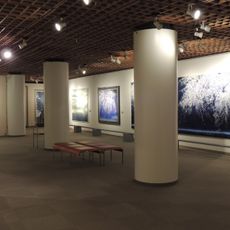
Chōjagahara Archaeological Museum, Archaeological museum in Itoigawa, Japan
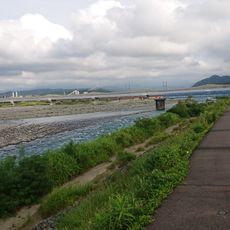
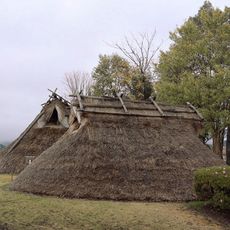
The Chōjagahara Archaeological Museum stands on a hill in Miyama Park, 3 km from the Himekawa river mouth and 90 m above sea level. It exhibits pottery, clay figurines, stone tools and jade objects from the Chōjagahara site, a Jomon settlement dated 5,000–3,500 years ago. The collection includes large jade beads, raw jade and tools for working jade.
The museum's findings come from a Jomon-period settlement where people developed advanced jade-working techniques. These techniques date back thousands of years and show early specialized craft traditions in the region.
The exhibits show how jade working developed in Japan through objects that reveal the skills of Jomon craftspeople. You can see how jade held importance in early Japanese society by examining the pieces on display.
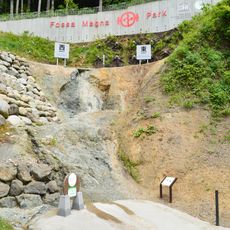
The museum stands on a hill about 90 m above sea level in Miyama Park, roughly 3 km from the Himekawa river mouth, next to the Fossa Magna Museum. The nearest bus stop is Chōjagahara Kōkokan-mae, one stop before the terminus. The site park and sports facilities are in the same park.
The museum stands on the Chōjagahara site, discovered around 1897 by Nakagawa Naokata and excavated in 1954–58 as Japan's first investigation of a jade-working site. Finds include jade beads, raw jade and jade-working tools, plus a bronze statue of Nunakawa-hime, the princess linked to jade in the Kojiki.
The community of curious travelers
AroundUs brings together thousands of curated places, local tips, and hidden gems, enriched daily by 94,818 contributors worldwide.