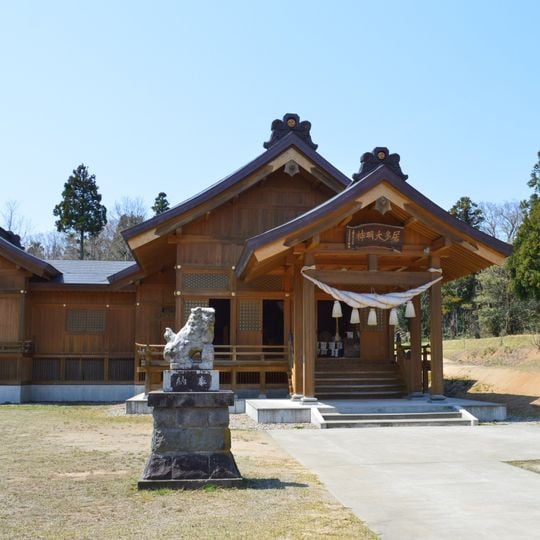
Kota Shrine, Shinto shrine in Gochi, Jōetsu, Japan
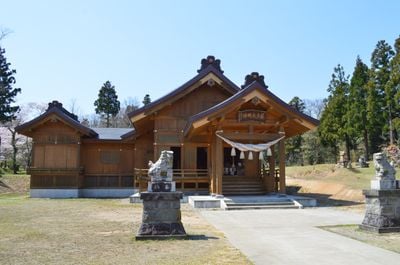
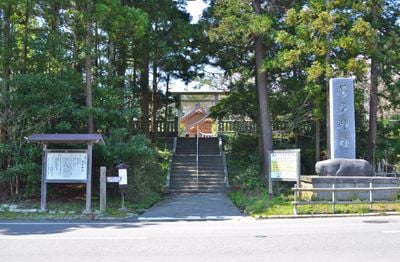
Kota Shrine is a Shinto shrine in the Gochi neighborhood of Jōetsu, Niigata Prefecture. Its present main hall, built in 2008, has a pale brown timber facade, a steep dark roof with a high central gable, and a gabled porch hung with a twisted straw rope and four white paper streamers. A stone animal statue stands to the left, and a long flight of concrete steps leads up to the shrine from a lower entrance.
First documented in 813, when the Nihon Kōki records its promotion to Junior Fifth Rank, Lower Grade, Kota Shrine was listed in the 927 Engishiki as a shrine of Kubiki County. It was patronized by the Uesugi clan and named ichinomiya of Echigo Province in the Muromachi period. Burned in 1533 and again in 1578 during the Siege of Otate, it was moved about a kilometre inland in 1879 because of coastal erosion; the present hall dates from 2008.
The shrine's name is written 居多 but read "Kota"; older readings were "Keta" and "Wita", and it is counted among the Keta shrines along the Sea of Japan coast. Its kami are Ōkuninushi, his wife Nunagawahime, and their sons Takeminakata and Kotoshironushi. In the grounds grows "kataba no ashi", a reed with leaves on one side only, said to have appeared overnight after Shinran prayed here; it is one of the Echigo Seven Wonders.
The grounds are easy to explore on foot with clear pathways connecting all areas throughout the compound. Visitors should wear modest clothing and follow local customs when entering sacred spaces.
In the shrine grounds grows a stand of reeds whose leaves sprout on only one side, called kataba no ashi. Legend says the reeds turned one-sided overnight after Shinran prayed here in 1207; they are counted among the Seven Wonders of Echigo.
The community of curious travelers
AroundUs brings together thousands of curated places, local tips, and hidden gems, enriched daily by 93,123 contributors worldwide.