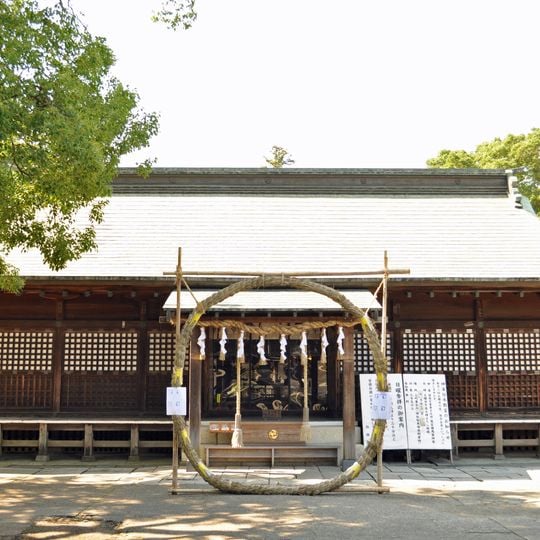
Washinomiya Shrine, Ancient Shinto shrine in Kuki, Japan
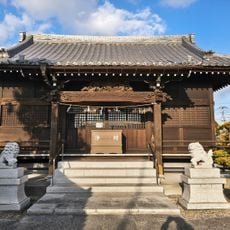
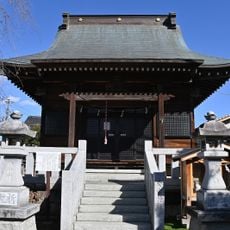
Washinomiya Shrine is a Shinto shrine in Kuki, Saitama Prefecture. Its main hall is a wide, single-storey wooden building with a pale grey, gently sloping roof and a dark wooden facade: a central bay flanked by lattice panels of square openings. In front of the centre hangs a rope ring about two metres across, thick and twisted with a yellow-green band, carrying white zigzag paper streamers and held up by four wooden posts. Two white signboards with black Japanese text stand to the right of the ring on the paved ground.
This shrine first appeared in written records from the Kamakura period and received recognition from noble families. Later, leading figures of the Tokugawa shogunate granted support to the site, reinforcing its standing in the region.
The shrine's kagura, the Washinomiya Saibara Kagura, is counted as a source of Kantō kagura and was recorded at the shrine in 1251 in the Azuma Kagami. Its thirty-six pieces were reduced to twelve by the Edo-period chief priest Fujiwara no Kunihisa. Dancers of hereditary families once received three tan of fields from the shrine; today the preservation society performs it at six shrine festivals and on 15 April at the Happō Washinomiya shrine.
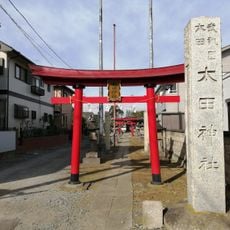
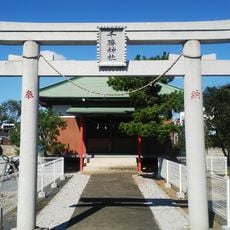
The shrine stands in Washinomiya 1-chome, Kuki, Saitama, and is reached from Washinomiya Station. The New Year season brings at least 100,000 visitors, so expect crowds then. The torii gate that collapsed in 2018 has since been replaced.
In the early 2000s, this site appeared in an anime, which led to new celebrations and special portable shrines designed by fans. Today, visitors arrive from many countries to experience the connection between old rites and modern media.
The community of curious travelers
AroundUs brings together thousands of curated places, local tips, and hidden gems, enriched daily by 93,150 contributors worldwide.