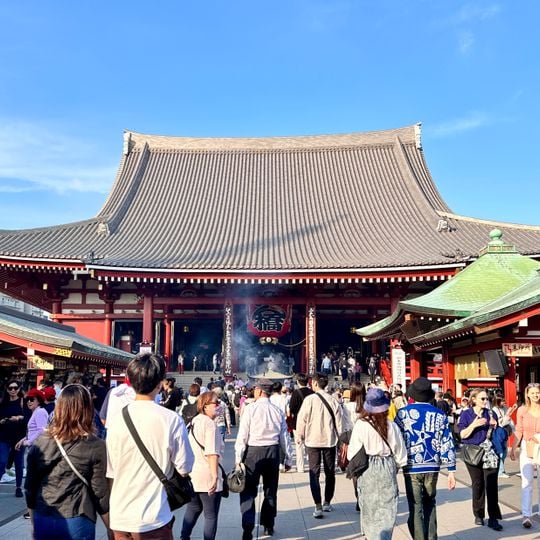
Sensō-ji Temple, Buddhist temple in Asakusa, Japan
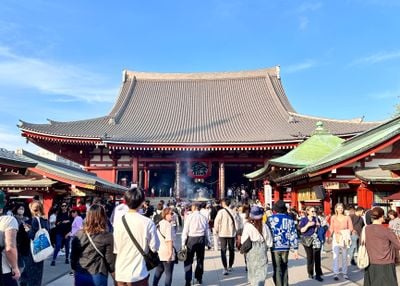
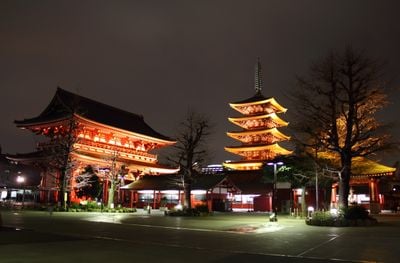
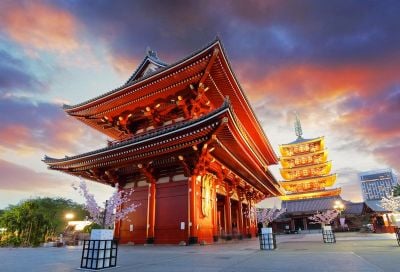
Sensō-ji is a Buddhist temple in Asakusa, Tokyo. Its main hall, rebuilt in 1958, has a sweeping grey tiled roof and a red facade with gold accents; a five-story pagoda stands to the west, and the Kaminarimon and Hōzōmon gates lead into the grounds.
Two fishermen discovered a statue of Kannon in the Sumida River in the year 628, which led to the founding of this oldest Buddhist temple in Tokyo. Most buildings were faithfully reconstructed after destruction during World War II.
The temple's name comes from the Kannon statue that two fishermen found in the Sumida River in 628. The statue is a hibutsu, never shown to the public; a replica made by Ennin in the 9th century stands in for it. The Sanja Matsuri in late spring fills the grounds with portable shrines.
The approach leads through the Nakamise shopping street, which stretches about 200 meters (650 feet) and is lined with small stalls selling souvenirs and snacks. Early morning or late evening offers the best chance to experience the grounds without large crowds.
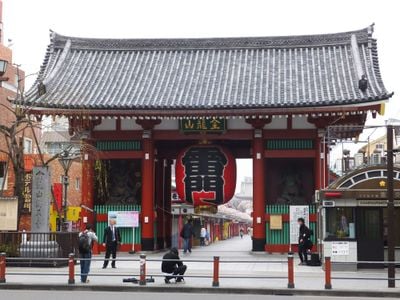
The Kaminarimon gate features guardian statues on both sides, depicting Fujin and Raijin, gods of wind and thunder who protect the entrance. The massive red lantern in the center weighs about 700 kilograms (1500 pounds) and is hoisted up during strong winds to prevent damage.
The community of curious travelers
AroundUs brings together thousands of curated places, local tips, and hidden gems, enriched daily by 92,121 contributors worldwide.