Nunobiki Dam, Gravity dam in Fukiai-chō, Japan.
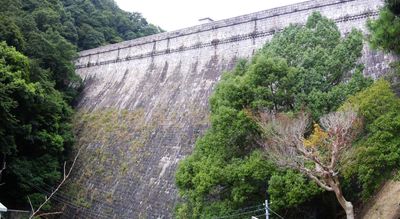
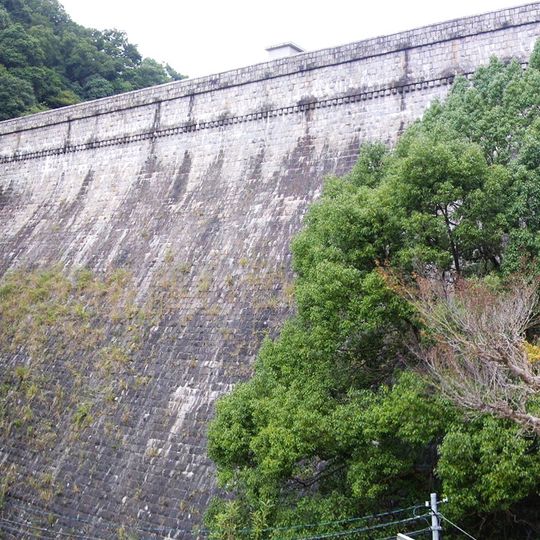
Nunobiki Dam is Japan's first concrete gravity dam, built in 1900 on the Ikuta River. Its outer wall keeps the stone masonry used as formwork, and a classical dentil cornice runs along the crest, giving it the look of a European castle wall. It still stores water for Kobe's municipal supply.
Engineers W. K. Burton and Chōsaku Yoshimura designed this as Japan's first concrete gravity dam, and it began storing water in 1900. The achievement demonstrated Japan's adoption of Western engineering methods to manage water resources for growing urban areas.
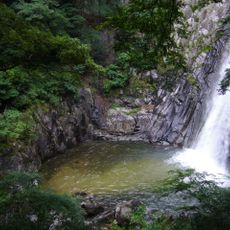
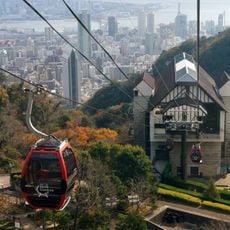
The name Nunobiki comes from the waterfalls upstream of the reservoir, and the dam is called Gohonmatsu after the five pines once standing on the site. Since 2006 the whole waterworks, including the dam, has been an Important Cultural Property of Japan, and it is listed among the Ministry of Health's 100 Modern Waterworks. At night the wall is lit up and can be seen from the Kobe Nunobiki Ropeway.
You can reach the dam through hiking trails starting from Shin-Kobe Station or use the ropeway that goes to an intermediate station for easier access. The paths vary in difficulty, so wear comfortable shoes and bring water for the walk.
A fault outcrop lies right beside the dam, yet the 1995 Great Hanshin earthquake did not set it moving. The masonry survived the quake intact after 95 years, though leakage increased and emergency repairs followed that summer.
The community of curious travelers
AroundUs brings together thousands of curated places, local tips, and hidden gems, enriched daily by 94,069 contributors worldwide.