Akama Jingū, Shinto shrine in Shimonoseki, Japan
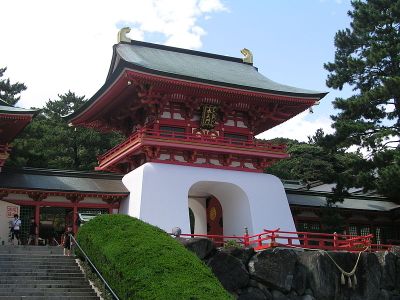
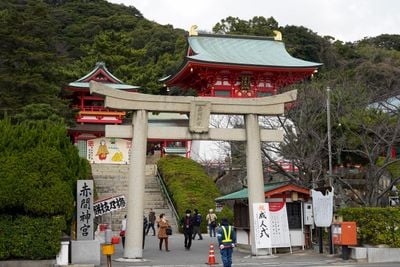
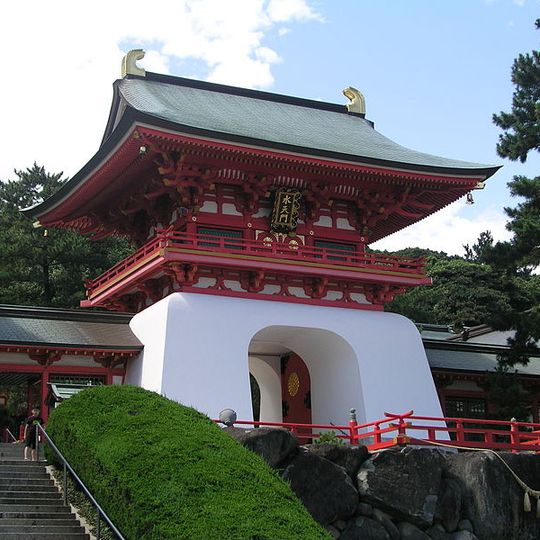
Akama Shrine is a Shinto shrine in Shimonoseki whose two-tiered gate building has a white lower wall with a central arched opening revealing a red door with a gold emblem, and above it a red timber storey with a railing, brackets and a dark grey-green curved gable roof topped by two gold ornaments. A large grey stone torii with a vertical inscribed plaque stands before a red-painted shrine building with a green copper roof edged in gold.
The shrine was founded in 859 and gained imperial status in 1940 through the Kanpei-taisha classification system. This recognition reflected its long-standing importance in Japanese religious history.
The shrine houses the Hoichido hall, displaying a statue of a blind musician from Japanese folklore who performed for spirits. This representation shows how local legends continue to shape the art and structures found here today.
The shrine is accessible by bus in about ten minutes from JR Shimonoseki Station or around thirty minutes from Shin-Shimonoseki Station. The grounds are easy to navigate and offer a comfortable visit for most travelers.
The mound group is called Shichimori-zuka, yet it holds fourteen memorial stones, one for each Heike figure including Tomomori, Noritsune and the nun Tokiko. Many names contain the character mori, which gave the site its name. The stones stand together as a single memorial tower for the clan lost at Dan-no-ura.
The community of curious travelers
AroundUs brings together thousands of curated places, local tips, and hidden gems, enriched daily by 94,974 contributors worldwide.