Kōmyōzen-ji, Zen Buddhist temple in Dazaifu, Fukuoka Prefecture, Japan
Kōmyōzen-ji is a Rinzai Zen temple of the Tōfuku-ji school in Dazaifu, founded in 1273 by Tetsugyū Enshin. Its front garden, the Bukkō-seki-tei, arranges fifteen stones in groups of seven, five and three to form the character for light on raked gravel. The rear garden, Itteki-kai-tei, uses blue moss for land and islands and white sand for water and the sea, with a long, curving shoreline.
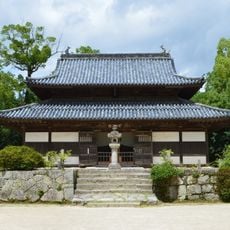
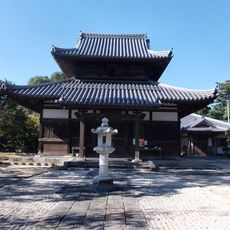
Founded in 1273 by Tetsugyū Enshin, a disciple of the Zen master Enni (Shōichi Kokushi), Kōmyōzen-ji belongs to the Tōfuku-ji branch of Rinzai Zen. In 1616 it was revived as the family temple of the shiso, the lay families serving Dazaifu Tenman-gū, and its main hall was rebuilt in July 1856.
The front garden displays stones arranged to represent the Japanese character for light, showing how Zen philosophy shapes the way gardens are designed and experienced. Visitors can observe this symbolic arrangement and understand how each stone carries meaning in the composition.
Kōmyōzen-ji is about 450 m, roughly six minutes on foot, from Dazaifu Station on the Nishitetsu Dazaifu Line. Since 2018 the grounds have been closed for renovation, so check before travelling that viewing has resumed. The temple stands at the end of a lane off the approach to Dazaifu Tenman-gū, past the first torii.
The front garden's fifteen stones are set in groups of seven, five and three to form the character for light (光), from which the temple takes its name. The rear garden, Ippon-kai-tei, uses blue moss for continents and islands and white sand for water and the great sea, its shoreline drawn in long, curving lines.
The community of curious travelers
AroundUs brings together thousands of curated places, local tips, and hidden gems, enriched daily by 93,528 contributors worldwide.