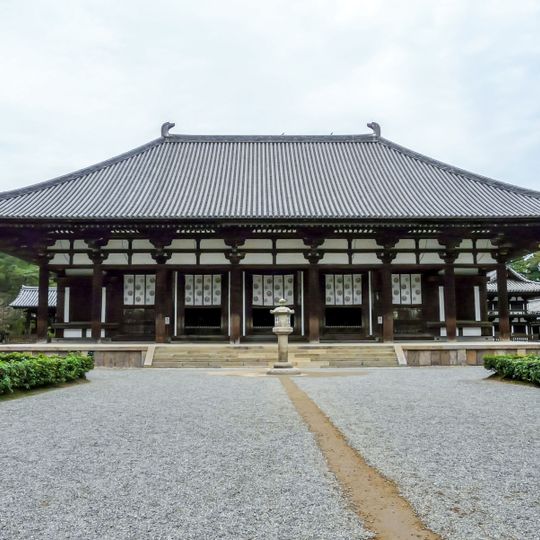
Tōshōdaiji, Buddhist temple in Nishinokyō, Nara, Japan
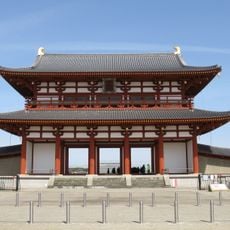
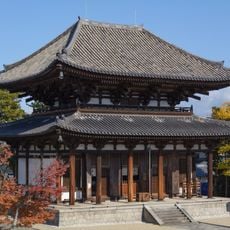
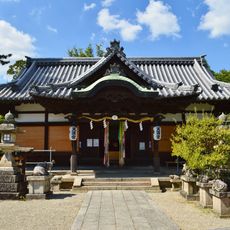
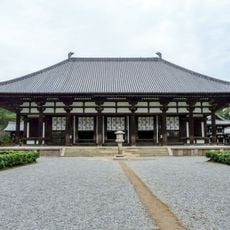
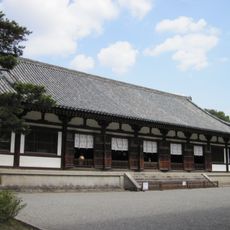
Tōshōdai-ji is a Buddhist temple in Nishinokyō, Nara. Its main hall, the Golden Hall, has a five-bay front with dark wooden doors and white curtains bearing circular patterns, set beneath a steeply pitched roof of dark grey tiles with ornaments at each end of the ridge. A white plastered band runs below the deep eaves, and the hall stands on a low stone base with steps.
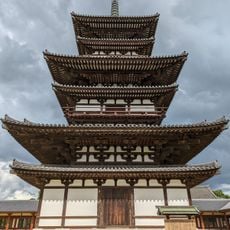
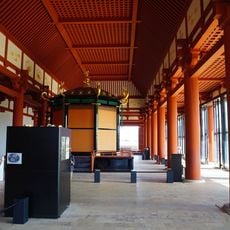
In 759 Jianzhen received the former residence of Prince Nittabe, the seventh son of Emperor Tenmu, and founded the temple there as Tangluzhaoti, meaning a place for studying Tang monastic discipline. The Lecture Hall, moved from the East Asa'ya Hall of Heijo Palace, was the first building completed in his lifetime. The Golden Hall was built after his death using timber felled in 781, and the East Pagoda followed in 810.
The temple's name derives from "Tang lü zhaoti," meaning a place for studying Tang monastic rules, and it was later renamed after receiving an imperial plaque. The Golden Hall enshrines a dry-lacquer Vairocana Buddha flanked by a Medicine Buddha and a Thousand-Armed Kannon, a trio not found together elsewhere. The portrait of Jianzhen is displayed only a few days each year.
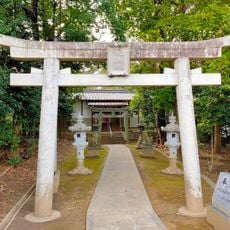
The temple lies in Gojo-chō, a short walk from Kintetsu Nishinokyo Station; buses from JR Nara Station take about 17 minutes. The grounds are entered through the south gate, with the Golden Hall and Lecture Hall standing close together in the central precinct. The Mieidō and the rear halls sit further back among the trees, so allow time to walk the full site.
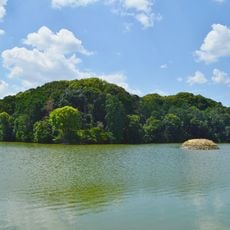
A portrait of founder Jianzhen hangs in one of the buildings and is shown only a few days each year. Lotus flowers from China grow in a pond on the grounds, recalling the origin of the monk who crossed the sea.
The community of curious travelers
AroundUs brings together thousands of curated places, local tips, and hidden gems, enriched daily by 92,654 contributors worldwide.