Mōtsū-ji, Buddhist temple in Hiraizumi, Japan
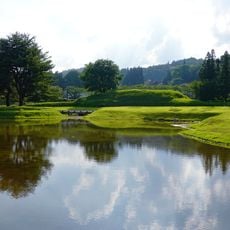
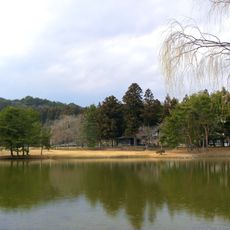
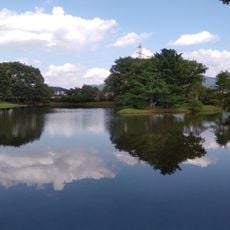
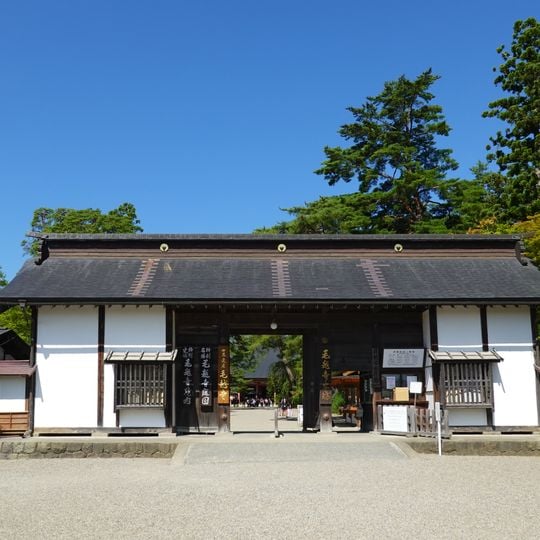
Mōtsū-ji is a Tendai Buddhist temple in Hiraizumi whose grounds centre on the Ōizumi-ga-ike pond, with two islands, one peninsula on the southeast shore and three on the south shore. The current Hondō, rebuilt in Heian style in 1989, and the Jōgyō-dō stand apart from the excavated foundations of the original halls. A single-storey gate with a dark tiled hip-and-gable roof, white plaster walls and a central plaque with gold characters faces the approach.
The temple was founded in the mid-9th century and flourished under the Northern Fujiwara family during the 12th century. At its peak, the complex became one of the largest and most important monasteries in the region.
The garden's designer is unknown but clearly knew the Sakuteiki, an 11th-century treatise on garden making. The pond's shoreline, with its beach, peninsulas and mountain rocks, is thought to represent a seacoast. The Ennen no Mai dance, an Important Intangible Folk Cultural Property, is performed on January 20 and during the spring and autumn Fujiwara festivals.
The grounds open at 8:30 all year, closing at 17:00 from April 5 to November 4 and at 16:30 from November 5 to April 4. The site is a nine-minute walk from JR Hiraizumi Station, and a town-run car park beside the temple holds 350 vehicles. The excavated foundations and pond lie on flat ground, so the whole circuit is walked easily.
The garden's designer is unknown, but the layout follows the Sakuteiki, an 11th-century Japanese treatise on garden making. The central island is shaped like a magatama, a comma-shaped bead, and the shoreline with its beach, peninsulas and mountain rocks is thought to represent a seacoast.
The community of curious travelers
AroundUs brings together thousands of curated places, local tips, and hidden gems, enriched daily by 93,239 contributors worldwide.