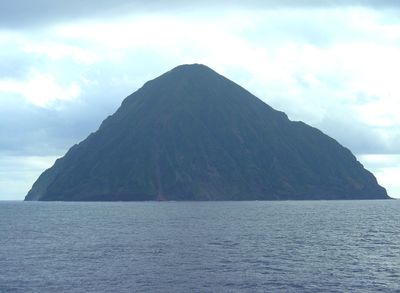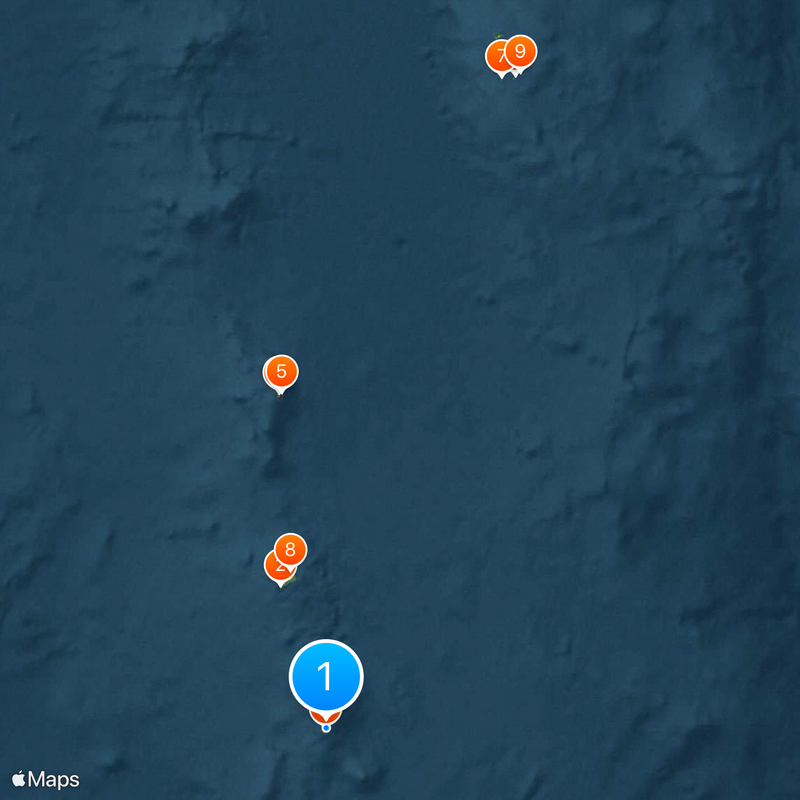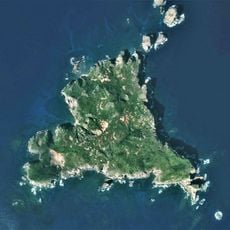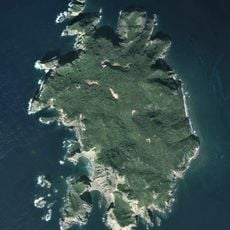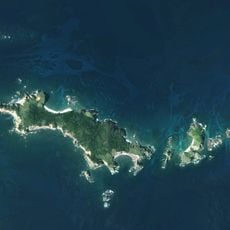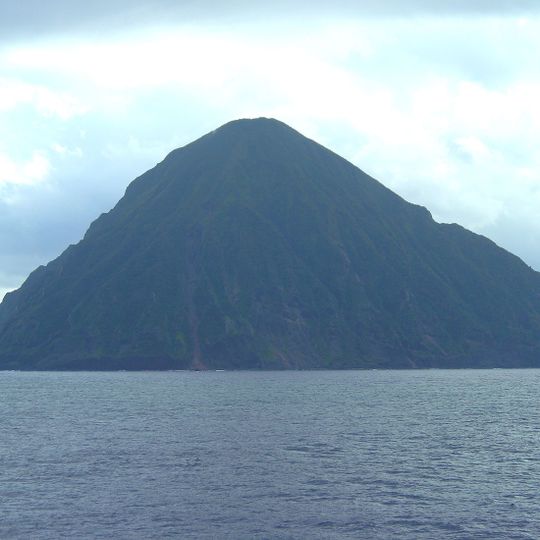
South Iwo Jima, Volcanic island in Ogasawara Subprefecture, Japan.
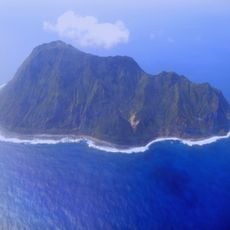
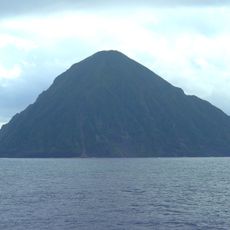
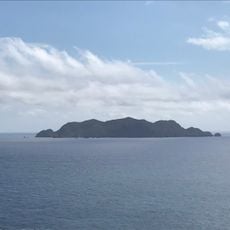
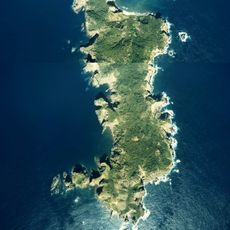
South Iwo Jima sits within the Volcano Islands of Ogasawara Subprefecture and consists of a single volcanic cone roughly 5 km (3 miles) across. The shoreline drops sharply into the ocean, while vegetation clings only to scattered pockets and large sections expose bare rock.
Spanish seafarers reached the area in the 16th century before Japan administered the island in the 19th century. The region remained remote, yet geological surveys began in the 20th century due to volcanic activity.
The Japanese name Minami-Iōtō translates directly to South Sulfur Island, referencing the active volcanic character of the landmass. Visitors cannot step ashore, yet its wild silhouette remains a symbol of untouched natural power in the western Pacific.
Public access remains permanently prohibited for conservation reasons, and only accredited scientists may apply for special permits. Those interested in the region can consult information at marine research centers on neighboring inhabited islands.
The remote location fosters endemic species found nowhere else on Earth. Research teams continue to document new plant and insect forms on each rare visit.
The community of curious travelers
AroundUs brings together thousands of curated places, local tips, and hidden gems, enriched daily by 90,798 contributors worldwide.