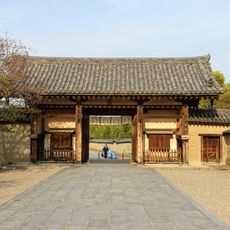
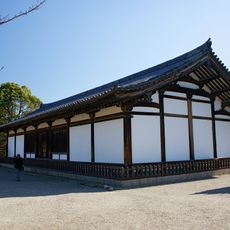
Hokki-ji, Buddhist temple and National Treasure in Ikaruga, Japan
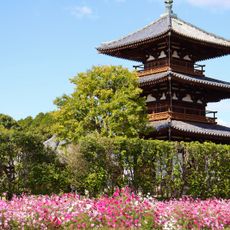
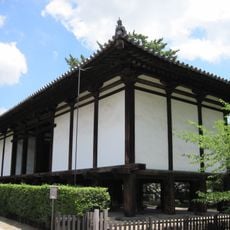
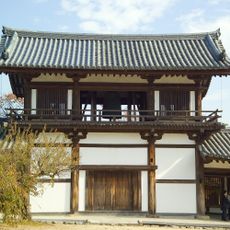
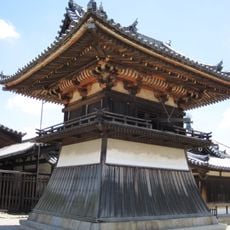
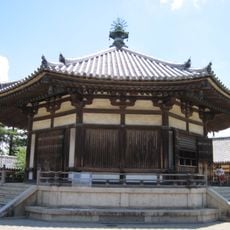
Hokki-ji is a Buddhist temple in Ikaruga featuring a three-story pagoda built using traditional Japanese wooden construction methods and standing about 24 meters tall. The complex includes multiple buildings from different periods spread across the grounds.
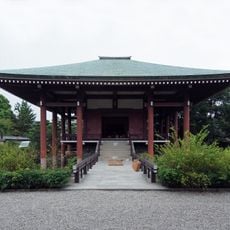
Hokki-ji traces its origin to Okamoto no Miya, the palace where Prince Shōtoku lectured on the Lotus Sutra; after his death in 622, his son Prince Yamashiro no Ōe converted it into a temple. In 638 the monk Fukuryō began a main hall housing a Miroku statue, and the three-story pagoda was completed in 706. The temple declined in the Heian period and came under Hōryū-ji; by the Edo period only the pagoda stood, and the lecture hall was rebuilt in 1694.
The temple's name means 'temple of the Arising Dharma'; it was long read 'Hokki-ji' but the temple now officially uses 'Hōki-ji', a change made for consistency with Hōryū-ji when both were registered as World Heritage. The main object of worship is a 3.5-metre wooden Eleven-Faced Kannon from the late 10th century, kept in the storehouse. The temple is stop 17 on the Shōtoku Taishi reijō pilgrimage.
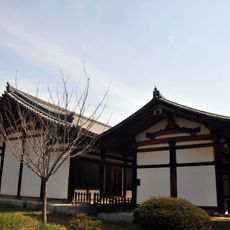
The temple is a 2.5 km walk northeast of JR Hōryū-ji Station, or a short bus ride to the Hokki-ji-mae stop, served on weekends. The grounds are compact: the pagoda stands east of the former main hall site, with the lecture hall and treasure house nearby. The site is a National Historic Site.
Archaeological excavations revealed that the temple stands on the former site of Okamoto no Miya palace, where lectures on the Lotus Sutra took place. This connection to a royal residence shows the site's early importance to Buddhist learning in Japan.
The community of curious travelers
AroundUs brings together thousands of curated places, local tips, and hidden gems, enriched daily by 94,024 contributors worldwide.