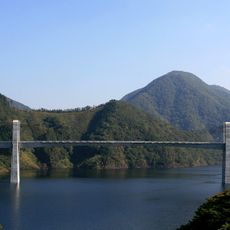
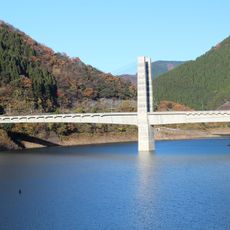
Tokuyama Dam, Embankment dam in Ibigawa, Japan
Tokuyama Dam is a 161 m high, 427.1 m long rock-fill embankment dam with a clay core on the upper Ibi River in Ibigawa, Gifu Prefecture. Its gray rocky face carries a line of pale markers along the crest, with a small concrete structure and metal framework at the top right end. The dam impounds Lake Tokuyama, Japan's largest reservoir by volume at 660 million m³, and its structural volume of 13.7 million m³ is the largest in Japan.
Construction began in 2000 and finished in 2008 following decades of planning by the Electric Power Development Company. The hydroelectric facility started operations in stages and has shaped the energy supply for the region ever since.
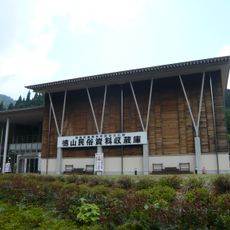
The dam is named after Tokuyama Village, which was entirely submerged; its 466 households moved to resettlement sites, and the artificial lake was named Lake Tokuyama at the former villagers' request. Photographer Tazuko Masuyama recorded the village's daily life until her death at 88, just before the dam's completion. Folk tools and household goods are displayed at the Tokuyama Folk Materials Storage in the Michi-no-Eki Hoshi no Furusato Fujihashi.
The dam is visible from viewpoints in the surrounding area, giving visitors a good sense of its scale and structure. Dress appropriately for mountain weather, as conditions can change quickly at this elevation.
Engineers used rapid fill placement techniques during construction, a method that set new standards for large-scale dam building in Japan at that time. This approach allowed work to progress faster than traditional construction methods would have permitted.
The community of curious travelers
AroundUs brings together thousands of curated places, local tips, and hidden gems, enriched daily by 93,711 contributors worldwide.