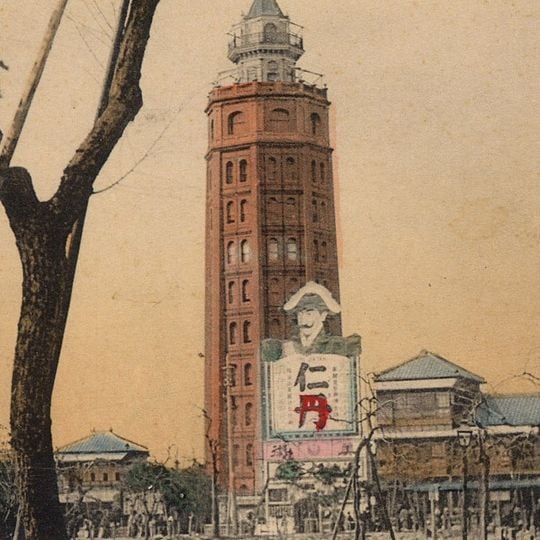
Ryōunkaku, Brick tower in Asakusa, Tokyo, Japan
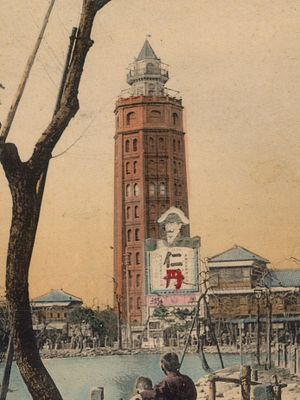
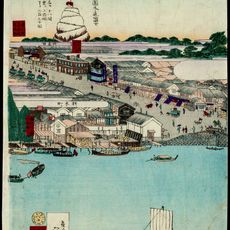
Ryōunkaku was a 12-story high-rise in Asakusa built from red brick and a wooden frame, standing roughly 52 meters tall. The facade had an octagonal shape that tapered upward, with electric lighting on every floor and open observation platforms in the upper sections.
Scottish engineer William K. Burton designed this tower, which opened on November 11, 1890, and became Japan's first Western-built high-rise. An 1894 earthquake damaged the structure, but it was reinforced with steel girders and remained standing until the Great Kantō earthquake of 1923 forced its demolition.
The name translates as Cloud-Surpassing Tower and reflected how people saw progress reaching toward the sky at that time. Visitors came not just for views but also to shop for imported items and attend events like geisha beauty contests.
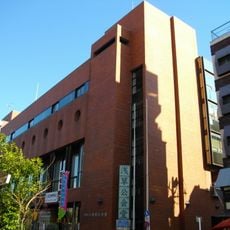
The upper floors offered views across the Kanto Plain and as far as Mount Fuji on clear days. The building stood until 1923 and left only foundation remnants that can be spotted during construction work nearby, with a supermarket now occupying the site.
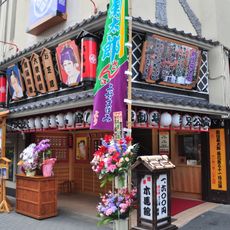
Artist Ogawa Kazumasa created an illustration for the opening that can still be seen today in reproductions on modern buildings in the neighborhood. Parts of the original foundation were rediscovered during excavation work nearby a few years ago, showing how deeply the structure was anchored into the ground.
Location: Asakusa-ku
Architects: W. K. Burton
Official opening: November 11, 1890
Floors above the ground: 12
Elevators: 1
Height: 52.4 m
Width: 14.92 m
GPS coordinates: 35.71574,139.79316
Latest update: December 5, 2025 08:05
This collection documents major buildings that have disappeared throughout history. It includes religious structures such as the 15th-century Porcelain Tower of Nanjing, whose glazed bricks gleamed in sunlight, as well as destroyed palaces, theaters, and public buildings from various periods and continents. Among the lost structures are the Colossus of Rhodes, the Temple in Jerusalem, the Great Buddhas of Bamiyan, the Berlin Wall, and the World Trade Center. The reasons for the disappearance of these structures range from warfare to natural disasters to deliberate demolition for urban redevelopment. The Palais du Trocadéro in Paris was demolished in 1937 to make way for the current Palais de Chaillot. The Crystal Palace in London burned down in 1936. The Tacoma Narrows Bridge collapsed in 1940, just months after opening. This compilation provides insight into lost architectural achievements and the historical circumstances of their disappearance.
Sensō-ji
341 m
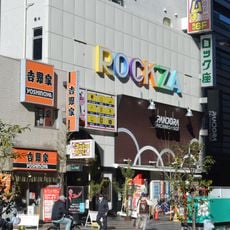
Asakusa Rockza
173 m
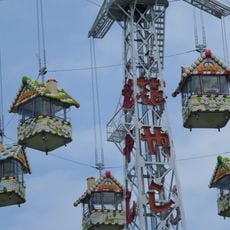
Hanayashiki
141 m
Kappabashi-dōri
380 m
Toyo-kan
241 m
Asakusa Engei Hall
250 m
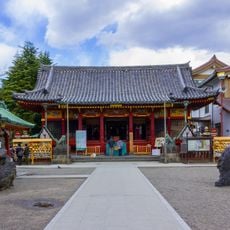
Asakusa Shrine
392 m
Hōzōmon
374 m
富士山縦覧場
316 m
Asakusa Kokaido Theater
403 m
Marubelldo
478 m
Mokubakan
207 m
Amuse Museum
450 m
Kaizen-ji
472 m
日輪寺
177 m
Asakusa Park Aquarium
205 m
Seisui-ji
441 m
SAMURAI NINJA MUSEUM TOKYO With Experience
481 m
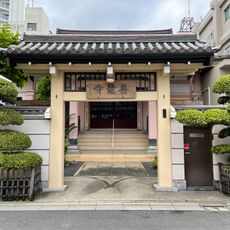
Banryū-ji
166 m
Honnen-ji
270 m
天嶽院
227 m
Tōkō-in
302 m
Jusen-in
162 m
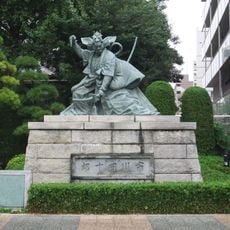
Statue of Danjūrō Ichikawa Ⅸ
274 m
Zenryū-ji
508 m
Kyōkaku-ji
499 m
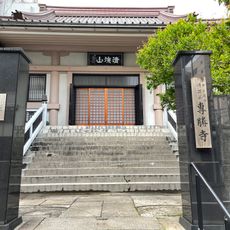
Senshō-ji
499 m
Drum Museum
455 mReviews
Visited this place? Tap the stars to rate it and share your experience / photos with the community! Try now! You can cancel it anytime.
Discover hidden gems everywhere you go!
From secret cafés to breathtaking viewpoints, skip the crowded tourist spots and find places that match your style. Our app makes it easy with voice search, smart filtering, route optimization, and insider tips from travelers worldwide. Download now for the complete mobile experience.

A unique approach to discovering new places❞
— Le Figaro
All the places worth exploring❞
— France Info
A tailor-made excursion in just a few clicks❞
— 20 Minutes