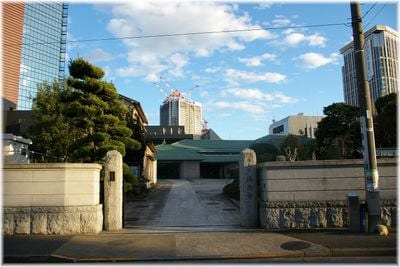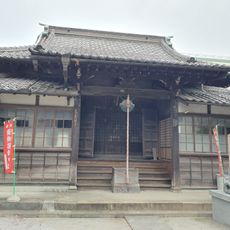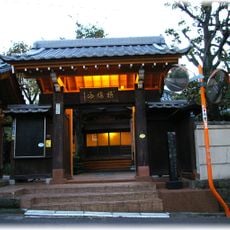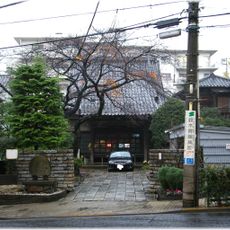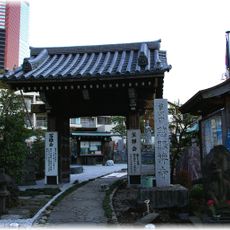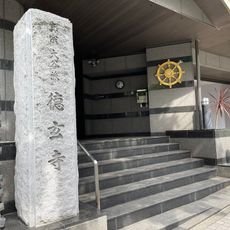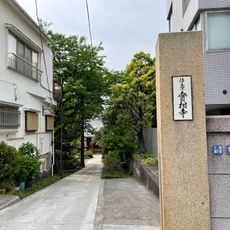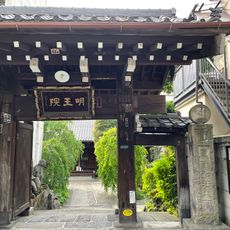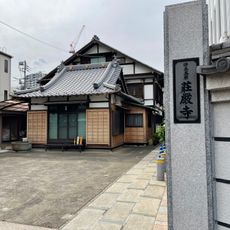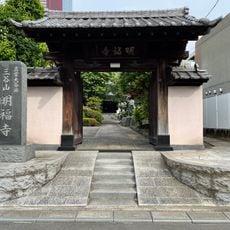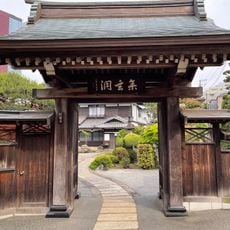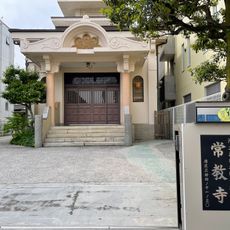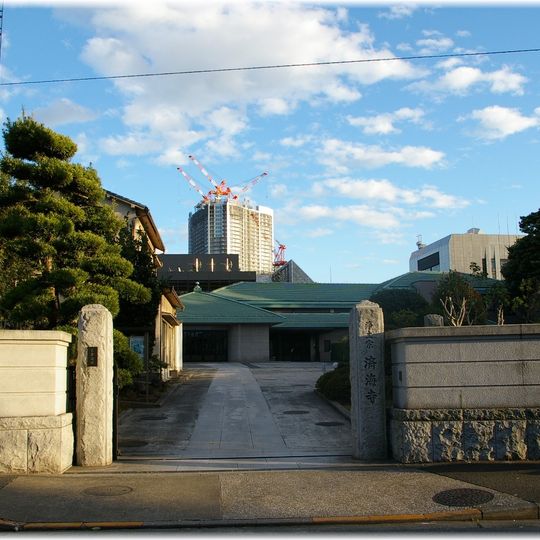
Saikai-ji, Buddhist temple in Minato-ku, Japan
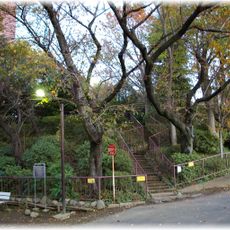
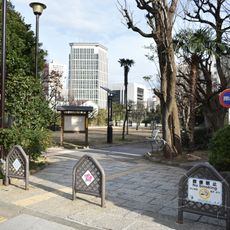
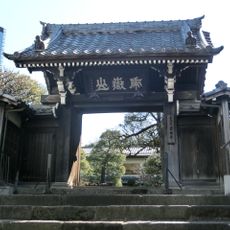
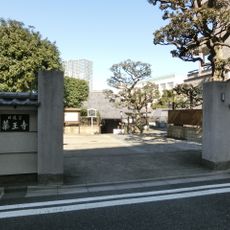
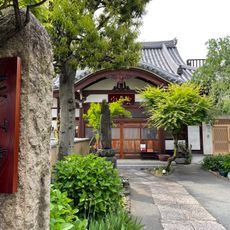
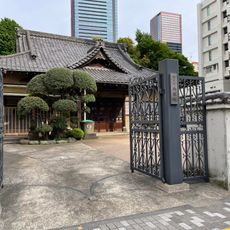
Saikai-ji, formally Shūkōzan Chōjuin Saikai-ji, is a Jōdo-shū temple at 4-16-23 Mita, Minato, Tokyo, next to Kamezuka Park. Its principal image is Amitābha, and its pilgrimage deity is Kamezuka Seikannon Bosatsu. The temple stands on the former site of Takeshiba-dera, linked to the Takeshiba legend in the Sarashina Diary.
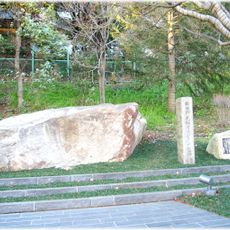
Founded in 1621 by Makino Tadanari and the monk Munen Shōnin, Saikai-ji served as the family temple of the Makino of Echigo-Nagaoka and the Matsudaira of Iyo-Matsuyama. From 1859 to 1874 its grounds housed the French consulate general and then legation. A monument marks the first French ministerial residence.
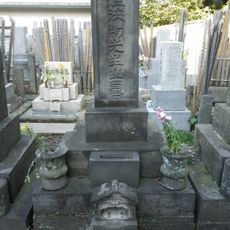
Saikai-ji is the 26th stop of the Edo Thirty-Three Kannon pilgrimage, and its pilgrimage image is Kamezuka Shōkanzeon Bosatsu. The temple also keeps the grave site of the Makino family, lords of Echigo-Nagaoka, whose remains were moved to Yūkyūzan in 1982 after an emergency excavation led by Kimio Suzuki.
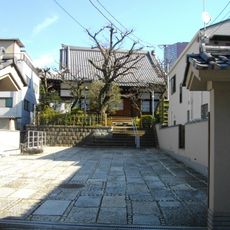
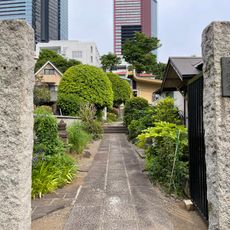
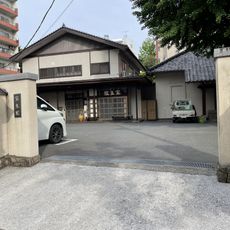
Saikai-ji stands at 4-16-23 Mita, Minato, next to Kamezuka Park, about ten minutes on foot from Mita Station on the Toei Asakusa and Mita lines. The precinct is small and flat, so the main hall, the Kannon hall and the French legation monument can be seen in a short visit.
In 1859 the temple became the French consulate general, and two years later the legation, serving until 1874. A monument in the precincts marks the site of the first French ministerial residence. In 1982 the Makino family graves of the former Echigo-Nagaoka lords were moved to Yūkyūzan, and an emergency excavation led by Kimio Suzuki examined the remains beforehand.
The community of curious travelers
AroundUs brings together thousands of curated places, local tips, and hidden gems, enriched daily by 93,766 contributors worldwide.