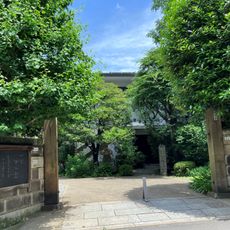
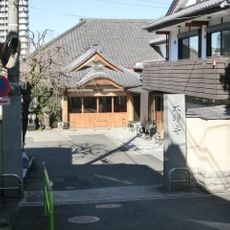
Gyokuhō-ji, Buddhist temple in Minato-ku, Japan.
Gyokuhō-ji is a Buddhist temple in Minato with traditional Japanese wooden structures, meditation halls, and spaces for ceremonies. The grounds preserve classic architectural features that serve different functions for daily spiritual practice.
Gyokuhō-ji was founded in 1599 in Hatchōbori, in what is now Sakurakawa, Chūō ward. In 1635, when the shogunate designated Mita as a temple district during the expansion of Edo Castle, the temple moved to its present site on Yūrei-zaka. Its mountain name, Goseizan, appears on the gate plaque written by Niwa Renpō, abbot of Eihei-ji.
The temple is known for the Oshiroi Jizō, a stone Jizō statue coated white with baby powder, registered as a Minato tangible folk cultural property. Women traditionally apply powder to the statue at the same spot as their own skin concern while reciting the Jizō mantra. Many also paint its fingertips with nail polish, so the figure is white with red fingertips.
The temple is a five-minute walk from exit 2 of Shirokane-Takanawa Station on the Toei Mita and Tokyo Metro Namboku lines, or about fifteen minutes on foot from Sengakuji Station on the Toei Asakusa line. The Jizo hall stands to the left of the main gate, where baby powder is provided for applying to the statue.
In the cemetery stands a stone Kannon statue modelled on actress Kitahara Yōko, a Takarazuka Revue graduate who died aged 24 in the 1985 Japan Airlines Flight 123 crash. Her ashes are buried in the Yoshida family grave here, and fellow performers including Kuroki Hitomi still visit, especially in August.
The community of curious travelers
AroundUs brings together thousands of curated places, local tips, and hidden gems, enriched daily by 93,658 contributors worldwide.