Taku Seibyō, Confucian temple and sacred grove in Taku, Japan
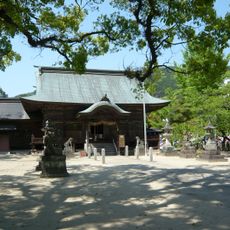
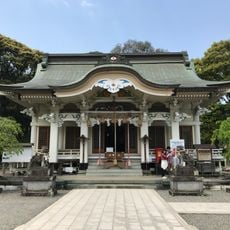
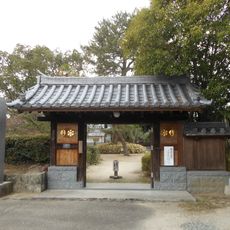
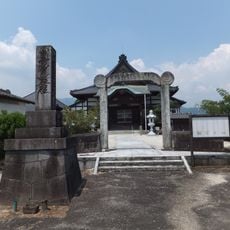
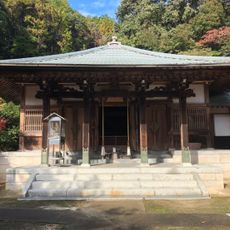
Taku Seibyō is a three-bay Confucian hall in the Zen Buddhist temple style, standing at the foot of Mount Shiihara in southeastern Taku. Its exterior carvings show a phoenix, kirin, elephant and dragon, and Chinese-style patterns appear that are not found at other Confucius shrines. The roof was changed from tiles to copper sheeting in the 1907 repairs.
In 1699 Taku Shigefumi, head of the Taku domain, founded a school (later Higashihara Shōsha) and placed a Confucius statue brought from China in its lecture hall. The worship hall at the foot of Mount Shiihara was completed in 1708, with a bronze statue cast in Kyoto. The site was designated a National Historic Site in 1921 and an Important Cultural Property in 1933.
The temple honours Confucius, and its name Seibyō means "sacred temple". The Edo-period academy here admitted students regardless of social class, teaching Chinese studies and martial arts. Look for exterior carvings of the phoenix, kirin, elephant and dragon, animals associated with good governance and education.
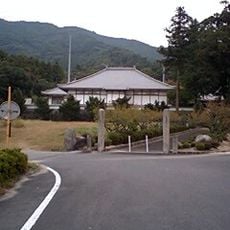
Taku Seibyō stands on the west side of Mount Shiihara, about 4.3 km south of Taku Station on the JR Kyushu Karatsu Line, roughly ten minutes by car. The grounds and buildings can be visited on foot, and the site lies in the southeast of Taku city.
The worship hall was completed in 1708 with a bronze Confucius statue cast in Kyoto, not imported from China. Most craftsmen and building materials came from within the village of Taku, so the temple was largely a local product.
The community of curious travelers
AroundUs brings together thousands of curated places, local tips, and hidden gems, enriched daily by 93,176 contributors worldwide.