Raikyū-ji, Buddhist temple in Takahashi, Japan
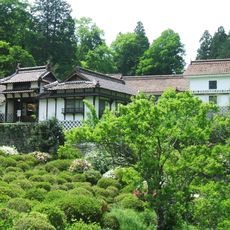
Raikyū-ji is a Zen temple in Takahashi featuring a dry stone garden before the main hall where carefully placed stones depict a turtle and islands amid ocean waves. The garden unites stone craft with views of surrounding hills in a balanced composition.
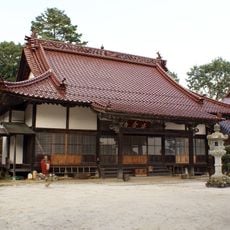
The temple's early history and original name are unknown; in 1339 Ashikaga Takauji revived it as the Ankoku-ji of Bitchū Province, dedicated to those who died in the Genkō War of 1331–1333. During the Eishō era (1504–1521) Ueno Yorihisa, lord of Bitchū Matsuyama Castle, took the tonsure here; after his death the temple was renamed Raikyū-ji using the kanbun reading of his name, and his grave remains on the grounds. The temple also holds the graves of three generations of the Mimura clan, and its buildings were destroyed in the 1575 Bitchū conflict and again by fire in 1839.
The garden is a karesansui dry landscape known as the Crane and Tortoise Garden, after the two stone islands at its centre. White sand raked into wave patterns stands for the sea, and a large clipped azalea on the left is shaped into seigaiha wave forms. Mount Atago serves as borrowed scenery behind it.
The temple is about a 15-minute walk from Bitchū-Takahashi Station. The garden is viewed from the Shoin, so visitors remove their shoes and sit on the tatami to look out over the raked white sand and stone islands; the borrowed scenery of Mount Atago is part of the composition.
Two stone formations in the garden have been known as Crane and Tortoise since 1609, representing symbols of longevity. These formations have kept their original positions across hundreds of years.
The community of curious travelers
AroundUs brings together thousands of curated places, local tips, and hidden gems, enriched daily by 94,561 contributors worldwide.