Hōjū-ji Temple, Buddhist temple in Higashiyama district, Kyoto, Japan
Hōjū-ji is a Tendai Buddhist temple in Higashiyama-ku, Kyoto, founded by Fujiwara no Tamemitsu. Its main image is Fudō Myōō, a Heian-period statue said to have been made by Ennin. The grounds include a main hall, an Amida hall, a garden, a thirteen-story stone pagoda, and a gate moved from the former imperial mausoleum.
Fujiwara no Tamemitsu founded Hōjū-ji in 988 to pray for his wife and daughter, but the temple burned in 1032. In 1158 Emperor Go-Shirakawa made it his cloistered residence, the Hōjūji-dono, and in 1183 Minamoto no Yoshinaka's troops set fire to its south hall. Rebuilt under Minamoto no Yoritomo in 1191, it guarded Go-Shirakawa's tomb until the Meiji era separated tomb and temple.
On 15 November the temple holds the Migawari Fudō-son Grand Festival, with a goma fire offering and a performance of bugaku dance. The main image, a Fudō Myōō said to have been made by Ennin, was revered by Emperor Go-Shirakawa and is held to have taken his place during Yoshinaka's fire. In May the emperor's wooden portrait is shown.
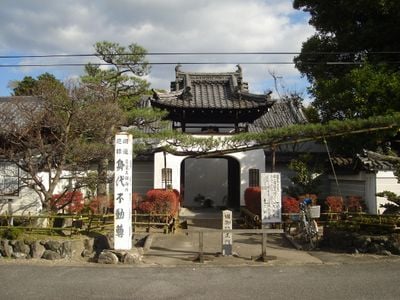
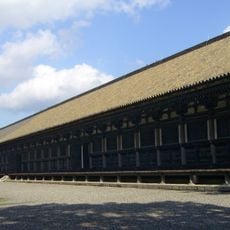
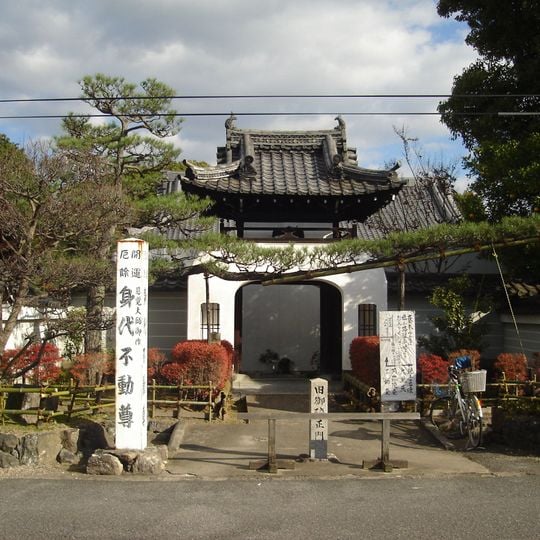
The main gate is the former front gate of the imperial mausoleum, and the arched opening leads into the courtyard. The temple stands in the Sanjūsangendō-mawari-chō district of Higashiyama-ku, a short walk from Sanjūsangendō. Services on 15 November and 14 December draw crowds, so other days are quieter.
The main image, Fudō Myōō, is said to have been carved by Ennin and to have taken the Cloistered Emperor Go-Shirakawa's place when Yoshinaka's troops burned the Hōjūji-dono in 1183. The temple still holds a Fudō rite every 15 November.
The community of curious travelers
AroundUs brings together thousands of curated places, local tips, and hidden gems, enriched daily by 94,363 contributors worldwide.