Sanjūsangen-dō, Buddhist temple in Higashiyama, Kyoto, Japan
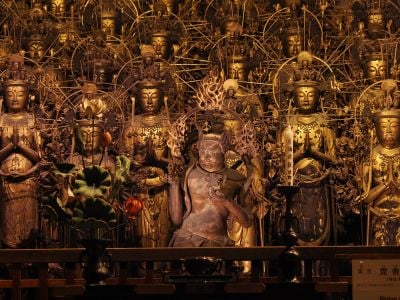
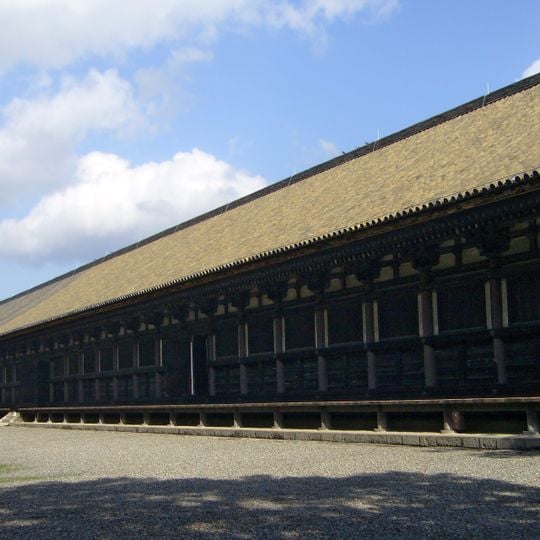
Sanjūsangen-dō is a Buddhist temple in Higashiyama-ku whose main building stretches approximately 120 meters (390 feet) and forms one of the longest wooden halls in the city. Inside stand over 1,000 gilded wooden statues of the goddess Kannon arranged in rows that fill the entire space.
The temple was founded in 1164 and its original building was destroyed by fire in 1249. Craftsmen and sculptors rebuilt the hall and created most of the gilded statues visible today.
The name comes from the spacing of pillars running along the building, which follows a traditional Japanese measurement system. Visitors walk through the galleries and notice how each wooden statue has a distinct facial expression and carved detail.
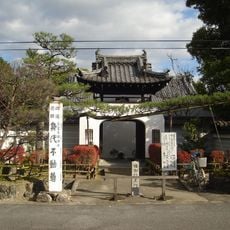
Visitors enter the inner precinct through the west entrance after paying admission, then walk the west corridor of the hall from north to south, passing the rows of statues. The east side of the hall, where the tōshiya archery contest was held, opens onto a garden with two ponds, one north and one south of the hand-washing pavilion and the East Gate.
Of the 1,001 standing Kannon, 124 survived the 1249 fire and date from the original hall; the rest were carved in the 13th century. Look for the five statues with crystal eyes set into the eye sockets, among them numbers 78, 80, 120, 169 and 459.
The community of curious travelers
AroundUs brings together thousands of curated places, local tips, and hidden gems, enriched daily by 92,382 contributors worldwide.