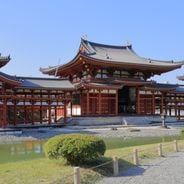
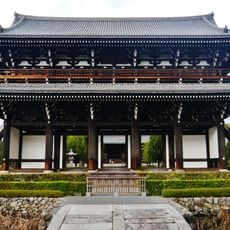
Tōfuku-ji, Buddhist temple in Higashiyama-ku, Kyoto, Japan.
Tōfuku-ji is a Zen Buddhist temple in Higashiyama-ku in Kyoto, Japan, with several buildings spread across a large compound. The grounds feature a two-story gate, meditation halls, landscaped gardens, and many smaller temples scattered throughout the area.
The temple was founded in 1236 by Kujo Michiie, an imperial chancellor, and the monk Enni, with its name combining elements from two major temples in Nara. Over the centuries, the grounds expanded and were enriched with additional buildings and gardens.
The gardens were laid out by landscape architect Mirei Shigemori in summer and autumn 1939. The moss garden in particular marked a renewal of Japanese gardening principles in the 20th century. The temple is known for its many maples, including the three-leafed Tsuten Momiji brought from Song China; cherry trees were cut down and replaced by maples to keep the grounds from becoming a place of amusement.
Visitors can explore several areas of the temple grounds freely, while some sections such as the bridge and certain halls require an admission fee. Autumn months bring many people who come to see the colored leaves, so visiting early in the morning or late afternoon is advisable.
The temple keeps a 2-metre-long Buddha's hand, the only part rescued when fire destroyed the 15-metre Sakyamuni statue in 1881. The Shinan ship, sent to Yuan China in 1323 for reconstruction materials, sank off Korea; its cargo tags read "Tōfuku-ji". The 1933 ceiling painting of a blue dragon by Inshō Dōmoto was completed in 17 days.
The community of curious travelers
AroundUs brings together thousands of curated places, local tips, and hidden gems, enriched daily by 92,781 contributors worldwide.