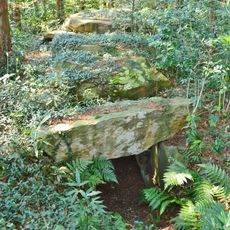
Kamiyodo Haiji, Buddhist temple ruins in Yonago, Japan
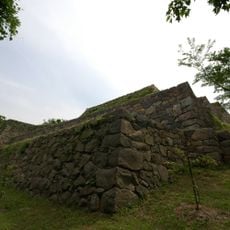
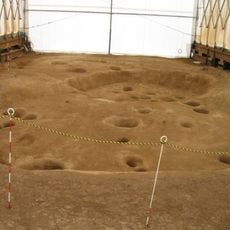
Kamiyodo Haiji is an archaeological site featuring the foundations of temple buildings, including a main hall and three pagodas arranged in a north-to-south line along a hillside. The remains reveal careful planning of the complex with structural details reflecting early Buddhist architecture.
Built in the late 7th century, the temple was repaired in the mid-8th century and destroyed by fire in the 10th or 11th century. Excavations from 1991 to 1993 uncovered the Kondō and three pagodas; a tile inscribed with the year 'Kimi' suggests construction around 683.
The wall-painting fragments include the heads of a heavenly general and a bodhisattva, a cuirass, lotus petals and a three-peaked mountain rising from clouds, a forerunner of later landscape painting. Pigments such as vermilion, malachite and azurite show mainland influence. Some fragments depict only a halo and lotus seat without the Buddha figure, for reasons that remain unclear.
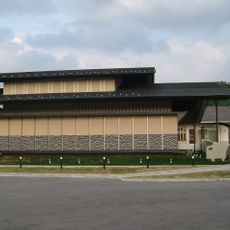
Visitors can explore artifacts and reconstructions at the Kamiyodo Hakuhō-no-Oka Exhibition Hall, located near the archaeological site. The exhibition center provides a helpful overview of the discoveries and the site's history.
The temple complex exhibits a rare architectural layout with three pagodas and double foundations showing influences from Baekje construction techniques. These design features suggest that early Japanese architects drew inspiration from Korean building practices.
The community of curious travelers
AroundUs brings together thousands of curated places, local tips, and hidden gems, enriched daily by 94,372 contributors worldwide.