Kōgaku-ji Temple, Buddhist temple in Koshu, Japan
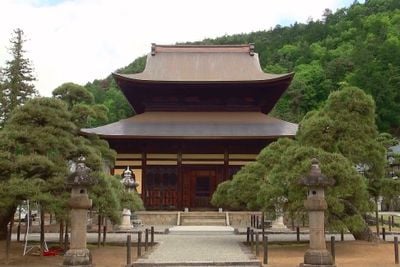
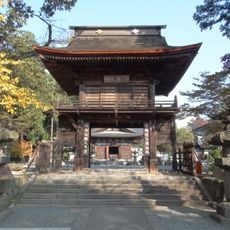
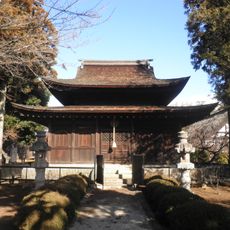
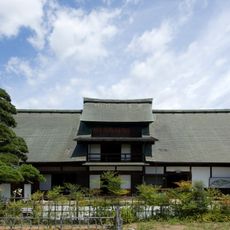
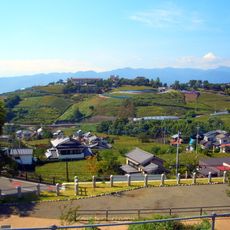
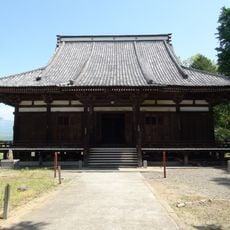
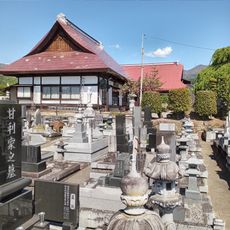
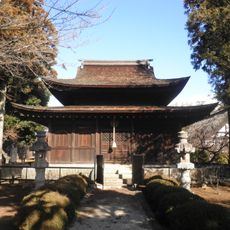
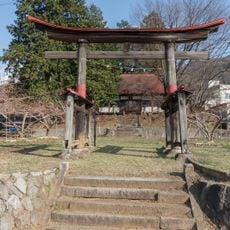
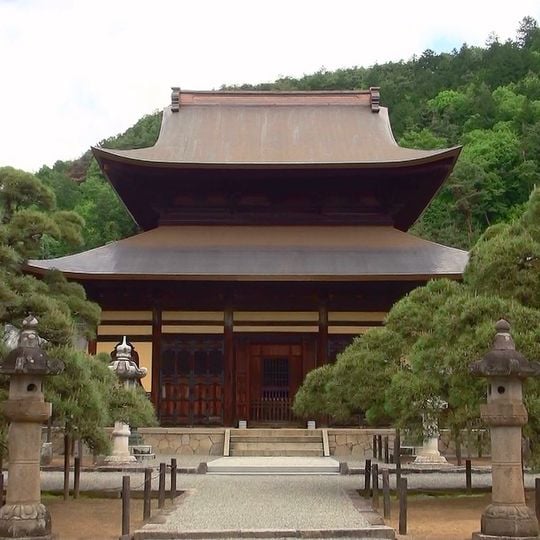
Kōgaku-ji is a Buddhist temple nestled at the base of a mountain slope in Koshu, featuring traditional wooden gates, meditation halls, and gardens with ponds and waterfalls. The layout flows across multiple levels, blending architectural structures with the surrounding natural landscape.
Founded in 1380 by Zen master Bassui Tokushō, the temple received imperial designation as a prayer site during the turbulent Nanboku-chō period civil wars. This official status secured its role as a spiritual center during an unstable era.
The temple's name derives from "Kōgaku-an", the hermitage founded by Bassui Tokushō; the character for "peak" refers to Mount Fuji, linked to a dream Bassui had. Its National Treasure is a 13th-century hanging scroll of Daruma in red robes, bearing an inscription by the Chinese priest Lanxi Daolong. The temple also keeps portrait scrolls of Zen prelates Sankō Kokushi and Daien Zenji, the latter painted in 1393 for the seventh memorial of Bassui's death.
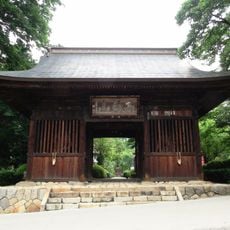
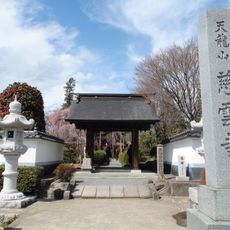
The temple and its garden are closed to the general public, so the halls and the rock garden on the slope of Shiroyama cannot normally be entered. The Chūmon gate, a Muromachi-period four-pillar gate with a cypress-shingle roof, stands behind the outer gate and can be viewed from outside. The temple is in Kōshū, Yamanashi Prefecture, at 2026 Shioyama Kami-Oso.
The temple's name refers to Mount Fuji: "dake" (嶽) means peak, chosen because Bassui Tokushō once had a sacred dream about the mountain. The garden lies on the slope of Shiroyama, the hill that gave the area its name, Shioyama.
The community of curious travelers
AroundUs brings together thousands of curated places, local tips, and hidden gems, enriched daily by 93,246 contributors worldwide.