Kongōshō-ji Temple, Buddhist temple in Ise, Japan
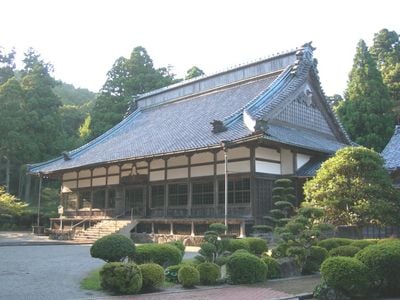
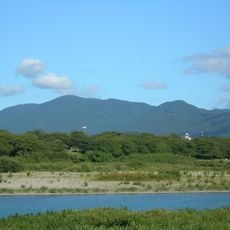
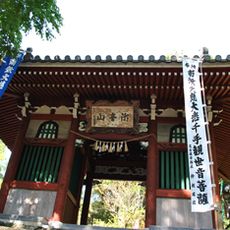
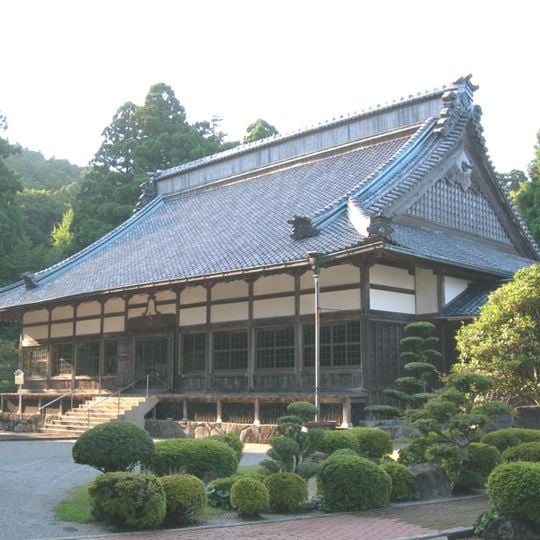
Kongōshō-ji is a Rinzai Zen temple on the east flank of Mount Asama's south peak in Ise, Mie Prefecture. Its main hall, rebuilt in 1609, has a steep dark grey tiled hip roof with a flared lower edge and a small carved triangular gable. Below the roof, dark timber frames hold white plaster panels and rows of vertical windows above a stone foundation.
Tradition attributes its founding to Emperor Kinmei, who in the mid-6th century had the monk Kyōtai build a chapel here. In 825 Kūkai turned it into a Shingon esoteric dojo and installed the Kokūzō Bosatsu image. In 1392 the Kenchō-ji monk Tōgaku Buniku converted it to Rinzai Zen, and Ikeda Terumasa rebuilt the main hall in 1609.
The main image, Fukuichi Mankoku Zoudai Bosatsu, is a hibutsu shown once every twenty years, the year after each Ise Grand Shrine removal. The temple offers sakaki instead of shikimi in its rites, a practice tied to its role as the inner sanctum of Ise Grand Shrine.
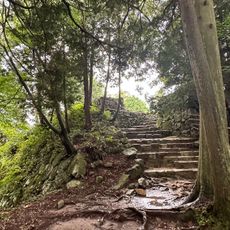
The main hall opens between 9 and 3:45 in the afternoon, reachable by taxi from Kintetsu Isuzugawa Station or via the Ise-Shima Skyline toll road. The mountain route winds steeply, so consider motion sickness or unsuitable footwear before the journey.
Along the approach to the Okunoin stand rows of wooden stupas between 2 and 8 metres tall, erected after funerals by families of any Buddhist school in the custom called take-mairi (also take-mōde), in which mourners climb Mount Asama to set up a stupa for the deceased.
The community of curious travelers
AroundUs brings together thousands of curated places, local tips, and hidden gems, enriched daily by 93,228 contributors worldwide.