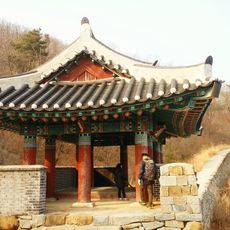
Sixth Republic of South Korea, Constitutional government period in Seoul, South Korea.
The Sixth Republic of South Korea is a constitutional state with a presidential system in Seoul, established under a new constitution drafted in 1987. The government divides power among the executive, legislative, and judicial branches, with a directly elected president serving a single five-year term and the National Assembly as the lawmaking body.
Mass protests in 1987 led South Korea to adopt democracy, with a new constitution establishing direct presidential elections and separation of powers. This shift ended nearly two decades of military rule and ushered in a new phase of political openness.
This period placed popular sovereignty at the heart of governance, fundamentally reshaping how Korean citizens viewed their role in shaping the nation. Direct elections became part of daily civic life as people cast votes and participated in selecting their leaders for the first time.
Visitors can explore government facilities in Seoul, where the presidential office and National Assembly are located. Weekday visits are recommended when institutions operate at full capacity and guided tours are available to show the workings of the system.
South Korea normalized relations with long-standing rivals such as the Soviet Union and China under this republic, ending the nation's isolation. These diplomatic shifts transformed South Korea's place in the global order after decades of rejection by communist powers.
The community of curious travelers
AroundUs brings together thousands of curated places, local tips, and hidden gems, enriched daily by 90,802 contributors worldwide.