National Zoological Gardens of Sri Lanka, Zoo in Dehiwala, Sri Lanka
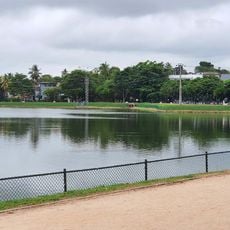
The National Zoological Gardens of Sri Lanka spreads over the Dehiwala site it has occupied since 1936, with dense tree cover, landscaped gardens and lawns converted into small forest patches rich in rare and medicinal plants. Shaded pathways link an aquarium, two walk-through aviaries, a reptile house, a butterfly garden kept humid by artificial mist, and an elephant arena and sea lion pool. A museum section holds skeletons, eggs, footprints and preserved specimens.
John Hagenbeck founded the facility in the late 1920s as a collecting station for his Tierpark Hagenbeck, where Heinz Randow gathered langurs, leopards, sloth bears and pythons across Asia. After the Zoological Garden Company was liquidated in 1936 the government acquired much of the collection, and the zoo officially opened in 1939 under its first director, Major Aubrey Neil Weinman. Lyn de Alwis, his successor, later helped design the Singapore Zoo.
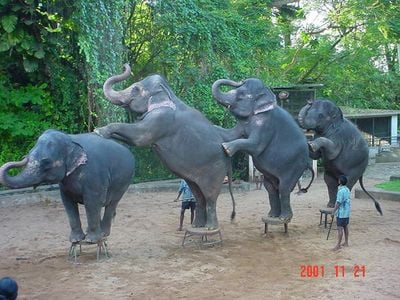
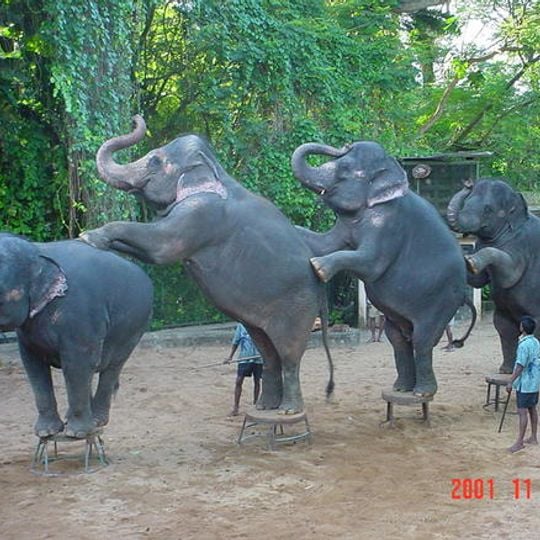
The zoo's name comes from Dehiwala, the Colombo suburb where it stands. Its daily programme includes elephant performances at the elephant arena, a sea lion feeding show at the sea lions' pool, and an educational show built around Sanju, a hand-raised baby chimpanzee. A butterfly garden keeps 30 species through all stages of their life cycles, with mist controlling temperature and humidity.
The grounds are easy to reach by public transport or car and located close to Colombo. The best time to visit is early morning, when animals are more active and temperatures are cooler.
Before World War I the site served as holding quarters for ethnographic expositions, displaying live people collected from across the region. In June 2021 the lion Thor, at the zoo since 2012, tested positive for COVID-19. The zoo also exchanges animals with other gardens for breeding.
The community of curious travelers
AroundUs brings together thousands of curated places, local tips, and hidden gems, enriched daily by 93,468 contributors worldwide.