Chefchaouen, Mountain city in Rif Mountains, Morocco
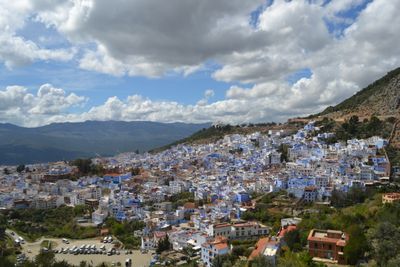
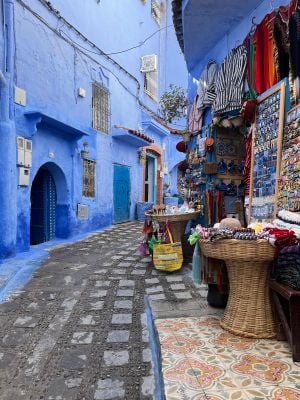
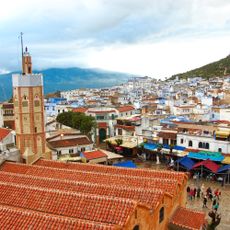
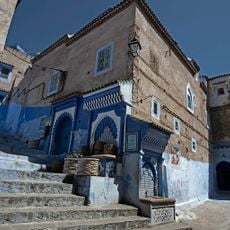
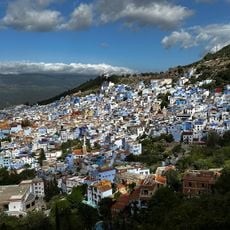
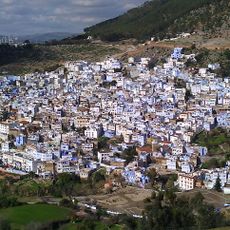
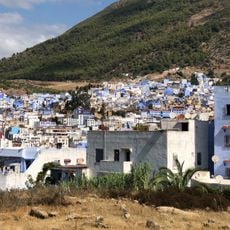
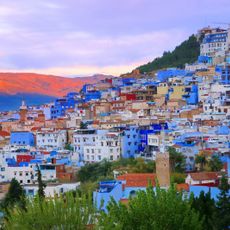
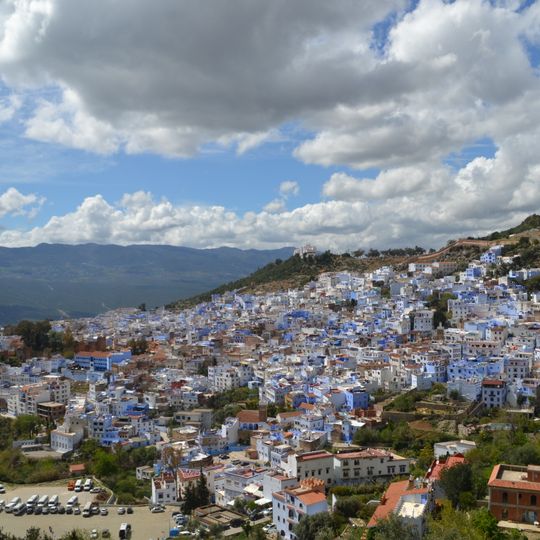
Streets and buildings display blue-painted facades set against the Rif Mountains at an elevation of 1850 feet (564 meters) above sea level, with narrow alleyways throughout the old quarter.
Ali ibn Rachid established a fortress in 1471 to defend against Portuguese invasions. Following Spanish conquest in 1920, the settlement developed through contributions from Sephardic Jews and Andalusian refugees.
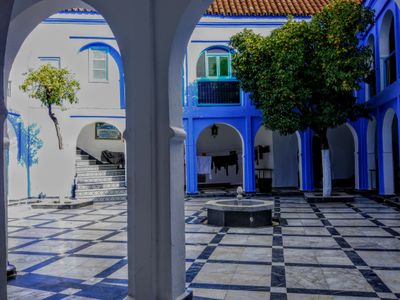
The medina contains over twenty mosques, eleven zaouias, and seventeen mausoleums, earning the settlement its designation as a Holy City with religious importance for Morocco.
Visitors can explore narrow medina streets through guided tours departing daily from Uta el-Hammam square in the center. The best visiting period runs from April through October for comfortable weather conditions.
Artisans produce specific goat cheese varieties and wool garments using techniques preserved through generations, continuing regional manufacturing traditions that predate modern industrial methods by several hundred years.
Location: Chefchaouen Province
Inception: 1471
Elevation above the sea: 564 m
Address: Chefchaouen, Morocco
Website: http://chaouen.ma/fr/accueil.aspx
GPS coordinates: 35.16877,-5.26835
Latest update: November 27, 2025 20:52
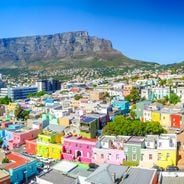
Earth displays its color range at numerous sites, from geological formations to human-built environments. The selection includes locations on six continents, where natural processes or cultural traditions have resulted in prominent visual displays. The Danxia mountains in China's Gansu province show layered sedimentary rock formations in reds, oranges and yellows, while Arizona's Painted Desert derives its colors from iron oxides and other minerals. Yellowstone's Grand Prismatic Spring owes its concentric bands of color to heat-loving bacteria that thrive in different temperature zones of the water. The Great Blue Hole off the coast of Belize reaches a depth of 407 feet (124 meters), providing a deep blue contrast to the surrounding turquoise shallows. Various communities have marked their built environment with distinctive color palettes. Chefchaouen in Morocco's Rif Mountains displays blue walls throughout its medina. Jodhpur in Rajasthan uses blue paint that originally marked Brahmin residences. Cape Town's Bo-Kaap presents houses in yellows, pinks, greens and blues, while Buenos Aires' La Boca neighborhood has corrugated metal facades in bright colors. Copenhagen's Nyhavn shows 17th and 18th century townhouses along the canal in reds, oranges, yellows and other hues. Scarborough's beach huts on the English coast offer a smaller scale of residential color. Water features contribute to the variety. China's Jiuzhaigou lakes display blues and greens due to calcium carbonate and algae. Tanzania's Lake Natron turns red to pink because of microorganisms living in its alkaline water. Pena Palace on a hilltop near Sintra, Portugal, combines yellow and red facades. Copacabana on Bolivia's Lake Titicaca offers whitewashed buildings with colorful accents. Hitsujiyama Park in Chichibu presents fields of phlox in pinks, whites and purples, while Kitakyushu's Kawachi Fuji Gardens feature wisteria tunnels. Even Longyearbyen on Svalbard displays colored wooden houses against Arctic landscapes.
This collection leads to places that remain outside standard tourist circuits. The selection includes natural landscapes and cultural sites that receive limited attention from international visitors. From the salt flats of Bolivia to ancient ruins in Turkish mountain terrain and the ice formations of Lake Baikal, the collection provides access to less frequented regions. Natural phenomena include the Benagil Cave along Portugal's Algarve coast, the Great Blue Hole off Belize, and the sandstone formations of The Wave in Arizona. Cultural sites such as Quinta da Regaleira near Lisbon, the abandoned nitrate town of Humberstone in Chile, and the fortified Berber village of Ait Benhaddou in Morocco show historical building methods and past ways of life. The Meteora monasteries in Greece and the Waitomo glowworm caves in New Zealand demonstrate the connection between human settlement and natural environment. The locations span all continents and climate zones. They range from tropical regions like the turquoise river at Hinatuan in the Philippines, through temperate zones like the Cinchado rock formation on Tenerife, to remote areas such as Pangong Lake in Indian Ladakh and the limestone pinnacles of Tsingy de Bemaraha in Madagascar. The collection allows travelers to experience regional characteristics without commercial tourism infrastructure.
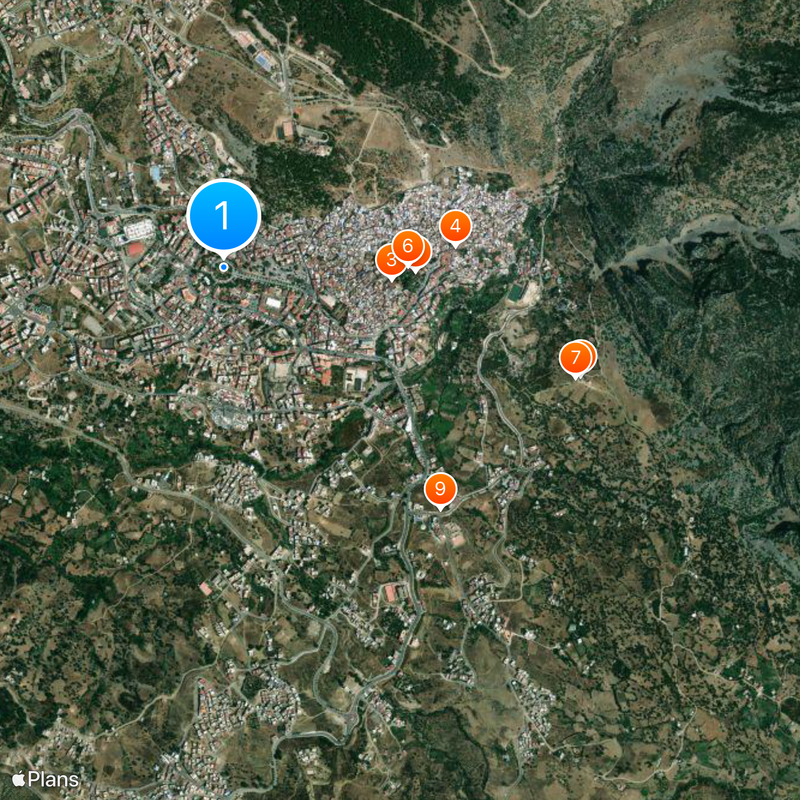
Msoura Stone Circle
66.7 km
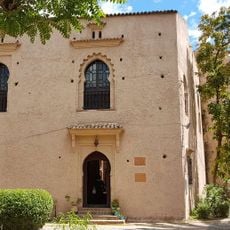
Kasbah of Chefchaouen
622 m
Oued Loukous
55.2 km
Stade Tétouan
53.4 km
Talassemtane National Park
13.2 km
The Great Mosque of Chefchaouen
548 m
Plage Martil
50.8 km
Isaac Ben Walid Synagogue
45.6 km
SMIR park
64.2 km
Church of Our Lady of Victory
45.7 km
Zawiya of Harrak
45.9 km
Yacimiento protohistórico de Kach Kouch
25.9 km
Al Wahda Reservoir
66.5 km
Chefchaouen Medina
758 m
Archaeological Museum of Tétouan
45.7 km
Chefchaouen Ethnographic Museum
601 m
Medersa loukach
45.7 km
Dar Al Mandri
45.6 km
Tetouan Modern Art Center
45.2 km
DarRati
41.2 km
Modern Art Center of Tetouan
45.2 km
Bab El Okla
45.6 km
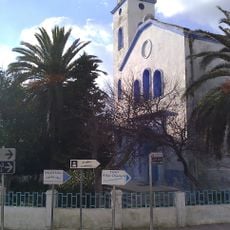
Chefchaouen Church
67 m
Bab Tout
45.8 km
Teatro Español
45.5 km
Bab Remouz
45.3 km
Bab Nouader
46 km
Chefchaouen Jewish Cemetery
1.1 kmReviews
Visited this place? Tap the stars to rate it and share your experience / photos with the community! Try now! You can cancel it anytime.
Discover hidden gems everywhere you go!
From secret cafés to breathtaking viewpoints, skip the crowded tourist spots and find places that match your style. Our app makes it easy with voice search, smart filtering, route optimization, and insider tips from travelers worldwide. Download now for the complete mobile experience.
A unique approach to discovering new places❞
— Le Figaro
All the places worth exploring❞
— France Info
A tailor-made excursion in just a few clicks❞
— 20 Minutes