Heraclea Lyncestis, Archaeological site in Bitola, North Macedonia
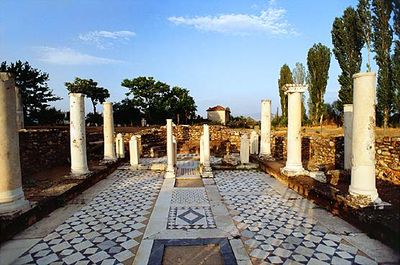
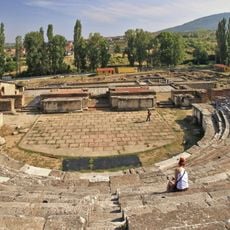
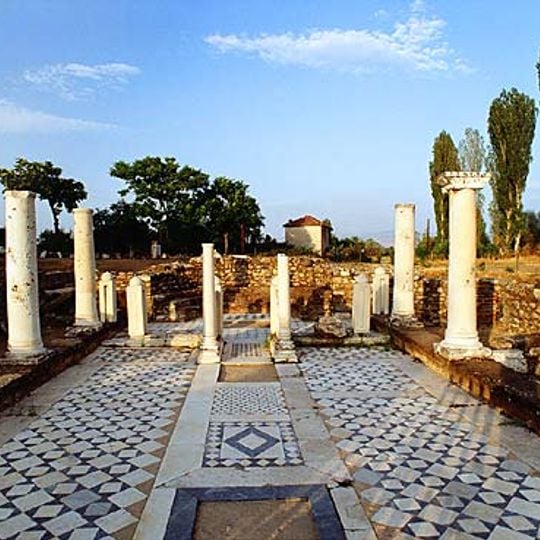
Heraclea Lyncestis is an excavation site in Bitola Municipality, North Macedonia, with Roman and early Christian buildings. Visitors see a theatre with rows of stone seats in a half-circle, remains of baths, a courthouse with columns, and several church ruins with preserved floor mosaics.
Philip II of Macedon founded the city in the fourth century BC and named it after Heracles and the Lyncestis region. Later, the Romans built the theatre and baths, before the first Christian basilicas appeared in the fourth century AD.
The large basilicas show floors made of small colored stones arranged to form animals, plants, and patterns. These works come from the time when Christianity took root in the region and believers gathered in these spaces.
The site opens daily, with longer hours during summer than in winter. Parking is available and part of the grounds is accessible by wheelchair, while other areas require walking over uneven surfaces.
The theatre seated 2500 spectators and used underground tunnels through which gladiators and animals reached the stage before performances. These tunnels are partly open today and visitors can trace the path the fighters once took.
The community of curious travelers
AroundUs brings together thousands of curated places, local tips, and hidden gems, enriched daily by 90,752 contributors worldwide.