Great Mosque of Djenné, Adobe mosque in Djenné, Mali
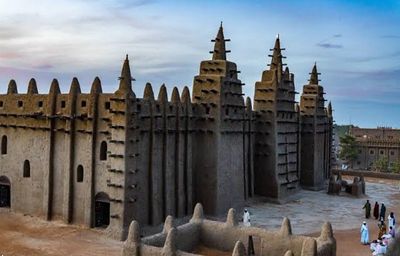
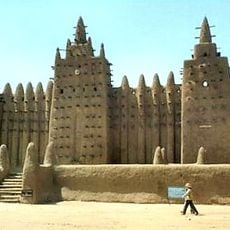
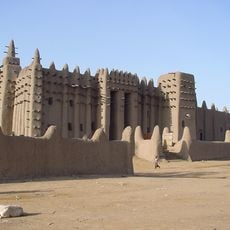
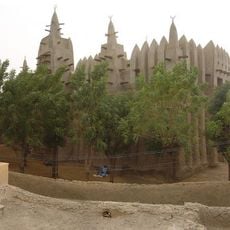
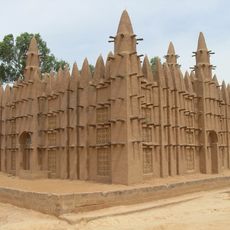
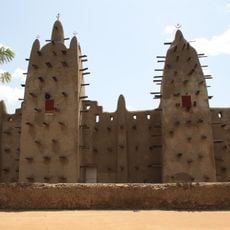
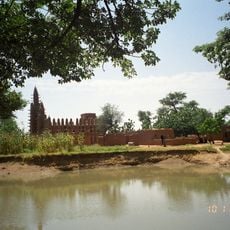
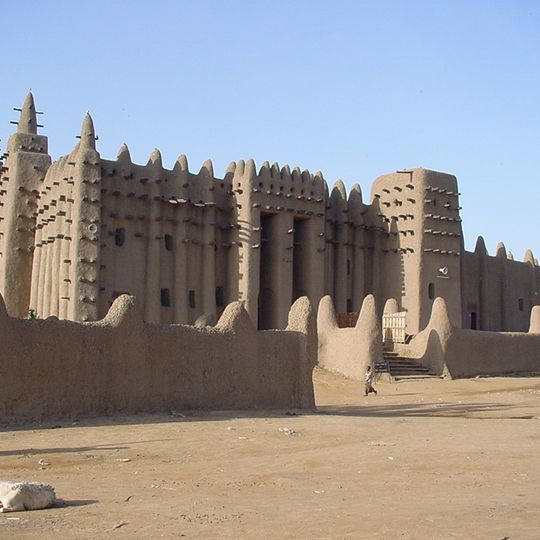
The Great Mosque of Djenné is a mud-brick mosque in Djenné, Mali, on the flood plain of the Bani River. Its square, pyramid-shaped mass measures 75 metres on each side and rises 20 metres. The east-facing qibla wall has three projecting rectangular towers, each with a spiral staircase and topped by a cone bearing an ostrich egg. Bundles of palm branches set into the walls absorb cracks.
The first mosque on the site was built around the 13th century after Sultan Koi Kunboro converted to Islam and demolished his palace. The present mosque was rebuilt in 1906–1907 under Ismaila Traoré, head of Djenné's guild of masons, not a French architect. French colonial governor William Ponty backed the project at the request of marabout Almamy Sonfo, and a madrasa was built nearby.
The mosque serves as a center for Islamic education, with students gathering in its courtyard to study religious texts and traditional teachings.
Each spring the community renews the outer mud coating during a several-day festival to protect the walls before the rainy season. Visitors may not enter the building but can observe the architecture and activity on the surrounding market square.
Around ninety wooden columns support the roof of the prayer hall, creating a forest of vertical supports inside. The walls reach a thickness of roughly three feet (one meter), which keeps the interior cool even when outside temperatures rise.
The community of curious travelers
AroundUs brings together thousands of curated places, local tips, and hidden gems, enriched daily by 93,362 contributors worldwide.