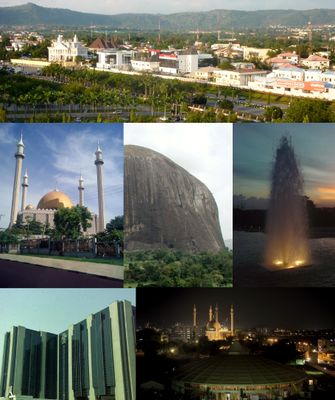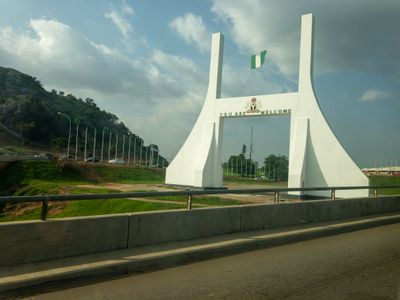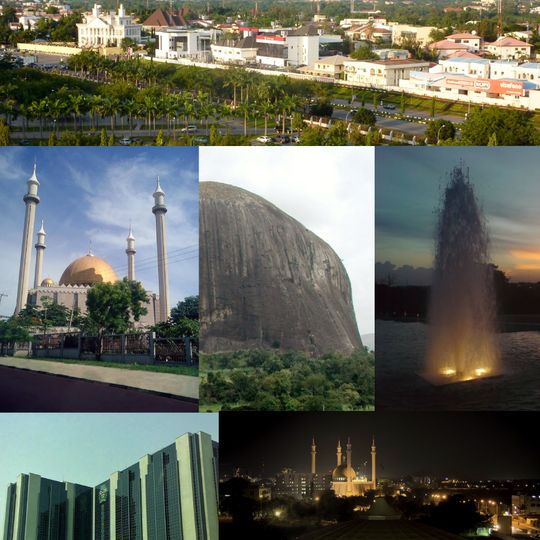
Abuja, Capital city in central Nigeria
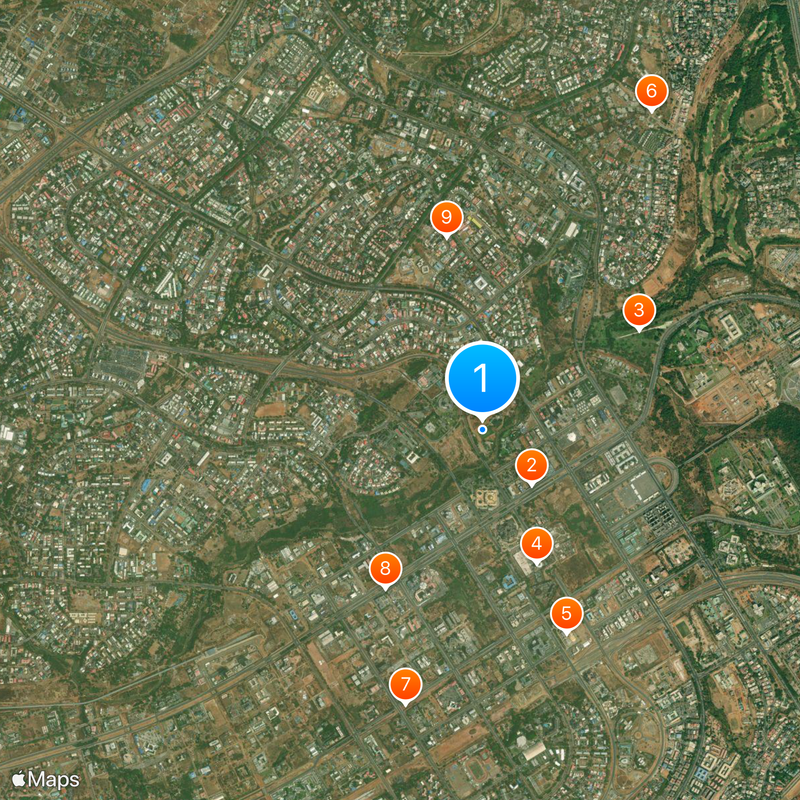
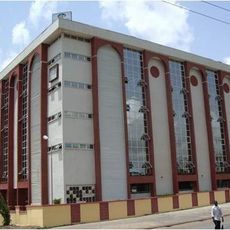
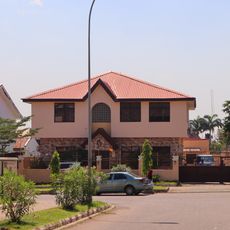
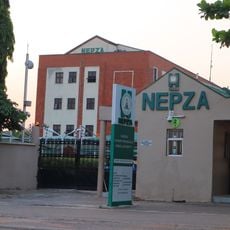
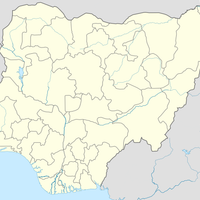
Abuja sits in central Nigeria and spreads across several districts around Aso Rock, a 400-meter monolith. Government buildings concentrate in the Central Area and Three Arms Zone, while residential and commercial zones extend in radial phases around the center.
Planning began in the 1970s on the Chukuku Hills to relocate the capital from Lagos. The city replaced Lagos as capital in 1991 and has since grown steadily as the political center of the country.
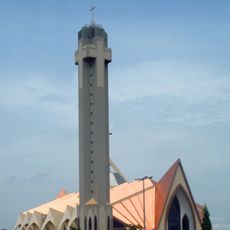
The National Mosque and the National Christian Centre draw worshipers from across the country and stand as meeting places for religious life. Markets like Wuse Market show daily routines, while festivals bring together music, dance and crafts from different Nigerian regions.
Nnamdi Azikiwe International Airport connects the city with domestic and international destinations and sits about an hour drive from the center. Expressways lead to other parts of the country, though traffic becomes heavier during rush hours and requires more travel time.
The city sits at 360 meters elevation, which moderates temperatures throughout the year and makes the climate more comfortable than in coastal cities. Separate phases are divided by wide expressways that follow the original development plan and create clear boundaries between neighborhoods.
The community of curious travelers
AroundUs brings together thousands of curated places, local tips, and hidden gems, enriched daily by 60,000 contributors worldwide.