Westerkerk, Protestant church in central Amsterdam, Netherlands
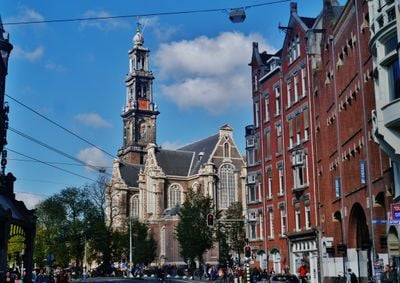
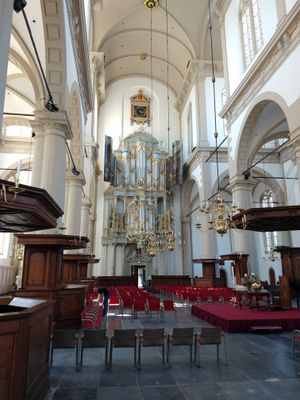
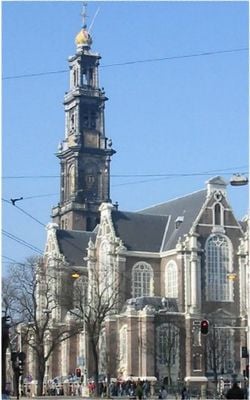
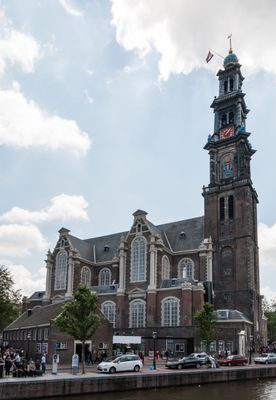
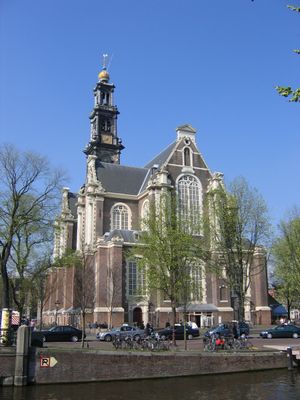
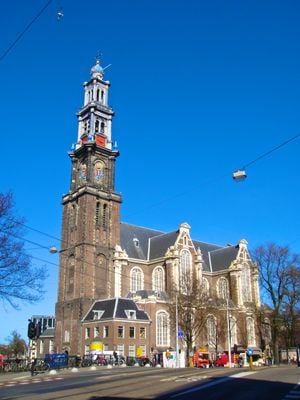
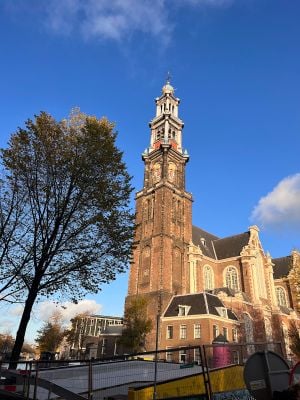
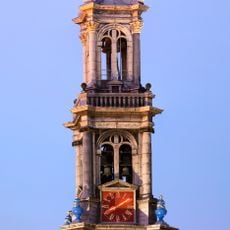
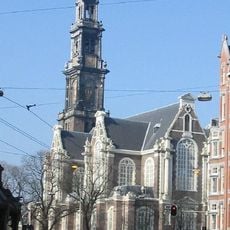
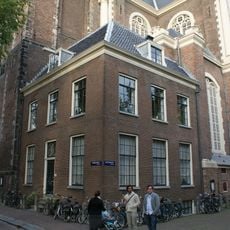
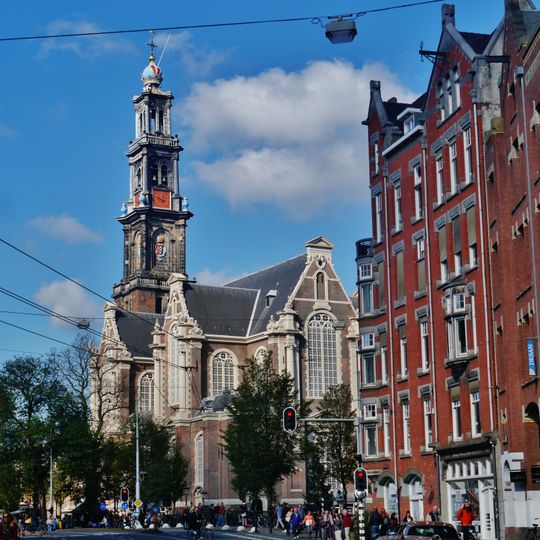
The Westerkerk is a three-aisled basilica of brown brick and grey stone with a high nave flanked by lower aisles, its rectangular plan formed by two connected Greek crosses. At the left front corner rises the Westertoren, stacked in stages: a square brick base, an open belfry, a clock with a dark blue dial, and a domed lantern topped by a cross. Inside, white plastered walls and pale stone columns frame a blue-grey organ case with gilded ornament.
Construction started in the early 1600s under architect Hendrick de Keyser and was completed by his son a decade later. The church was built as a Protestant place of worship during a period of major religious transformation in the city.
The organ remains central to life inside, with regular concerts bringing sound and energy to the space throughout the year. Visitors notice how the music connects the building to the community around it.
The church is freely accessible from the outside and visible from many points in the city. Tower visits and guided tours require planning ahead, as opening conditions may vary depending on the season and special events.
The tower's upper section, added in 1637, is topped by the Imperial Crown of Austria of Maximilian I. Its carillon holds 51 bells, the largest fourteen cast by François Hemony in 1658; the modern bells replaced ones damaged by air pollution. The carillon sounds all twenty-four hours, the only one in the city to do so.
The community of curious travelers
AroundUs brings together thousands of curated places, local tips, and hidden gems, enriched daily by 95,503 contributors worldwide.