Bridge in Łażany, Site of a demolished cast iron arch bridge in Łażany, Poland
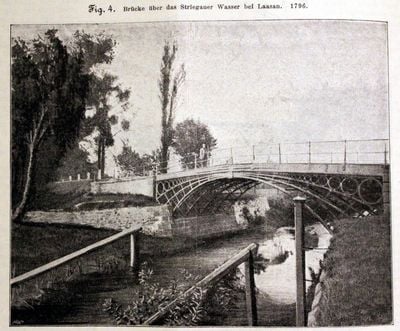
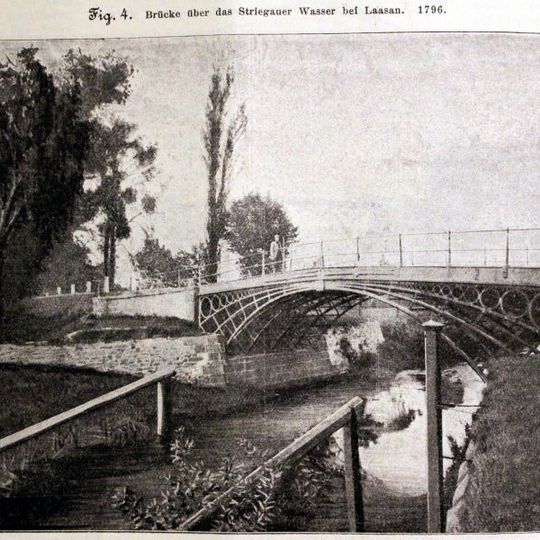
The bridge in Łażany no longer exists: it was a single-span cast iron arch over the Strzegomka, 12.55 m in span, 2.80 m high and 5.70 m wide, with a load capacity of 6 tonnes. Its five arched ribs, 15 m long and set 1.35 m apart, were bolted together; the whole structure weighed 40 tonnes. German sappers blew it up in 1945, and about 8 tonnes of remains were recovered from the river in 1995 and 2003.
Nicolaus August Wilhelm von Burghaus ordered the bridge in 1793 from the Malapane ironworks in Ozimek, inspired by the Iron Bridge at Coalbrookdale, to carry coal from Wałbrzych to the port at Malczyce. John Baildon supervised assembly, and the bridge opened on 30 July 1796 at a cost of 13,000 thalers. German sappers blew it up by 13 February 1945; remains were recovered from the Strzegomka in 1995 and 2003.
The bridge was opened on 15 July 1796 with a ceremony at which Count von Burghauß commissioned 300 medals from the Breslau medallist König. Gold-plated plaques on both sides named the investor. Remains recovered from the Strzegomka in 1995 and 2003 are displayed at the Wrocław University of Science and Technology campus.
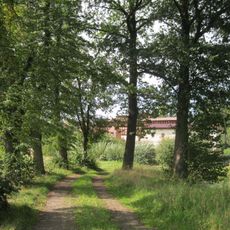
The bridge no longer exists: German sappers blew it up in early March 1945, and the Strzegomka flows freely at the site. Remains were recovered from the river in 1995 and 2003; some fragments are displayed on the campus of Wrocław University of Science and Technology, while others were scrapped. Nothing of the crossing is left to walk over.
This structure was built using late 18th century techniques and employed cast iron in an innovative single-span design. The engineering solutions show how builders of that time worked with new materials and pushed the boundaries of bridge construction.
The community of curious travelers
AroundUs brings together thousands of curated places, local tips, and hidden gems, enriched daily by 94,700 contributors worldwide.