Sobótka-Górka Castle, Palace in Sobótka-Górka, Poland
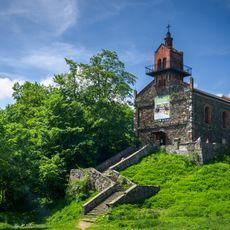
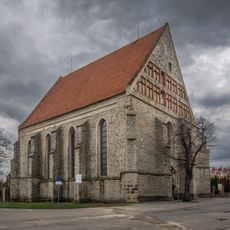
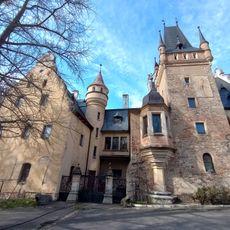
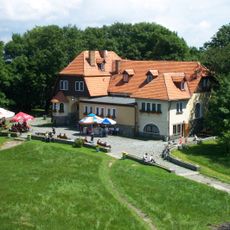
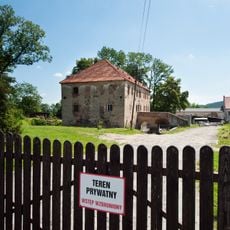
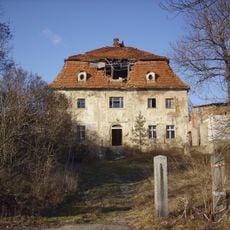
Sobótka-Górka Castle is a palace with a two-story chapel built into its eastern section. Granite blocks and brick form the walls throughout the entire structure.
A chapel for the regular canons was founded here in 1121; the village of Górka appears in Duke Henry the Bearded's documents of 1204 and 1208. Hussite raids destroyed the provostry in 1428 and 1435, and rebuilding from the later 15th century added a residential wing to the chapel between 1524 and 1553. Eugen von Kulmiz had the complex rebuilt as a Neo-Renaissance palace to Wilhelm Rhenius's designs in 1886–1891.
The two entrance lions are stone monuments documented before 1900, not medieval carvings. Inside, the former church holds ceiling paintings discovered during restoration and an epitaph of provost Valentin Aeschius, probably designed by Gerard Hendrick. The estate served as the summer residence of the bishops of Wrocław until secularisation in 1810.
The location now operates as a hotel, allowing visitors to stay overnight in a historic building. Many original features remain visible throughout the structure, though some areas have been adapted for contemporary use.
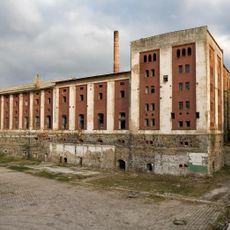
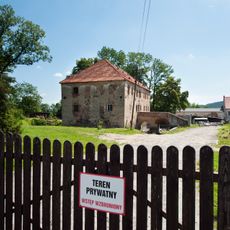
The entrance is flanked by two stone lions, documented before 1900. The complex also includes a 19th-century brewery that is no longer operating, and a gatehouse, coach house and 1930s educational centre stand beside the palace.
The community of curious travelers
AroundUs brings together thousands of curated places, local tips, and hidden gems, enriched daily by 93,675 contributors worldwide.